
Talk to our team800-428-5367
Engineered by leading Chinese OEM factories for Moroccan residential villas, hospitality resorts, and commercial developments.
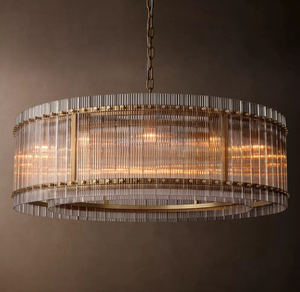
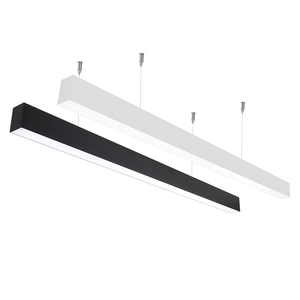
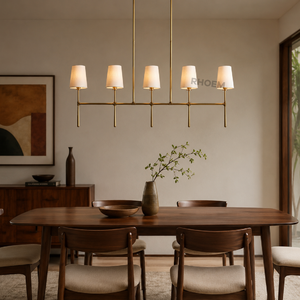
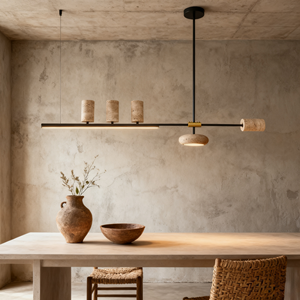
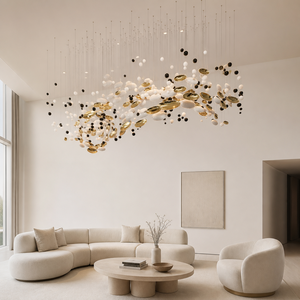
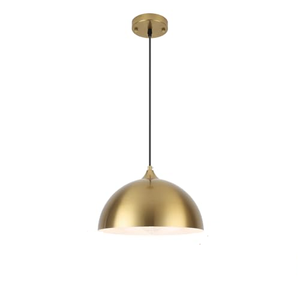
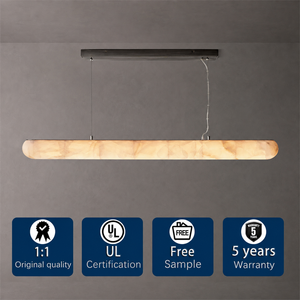
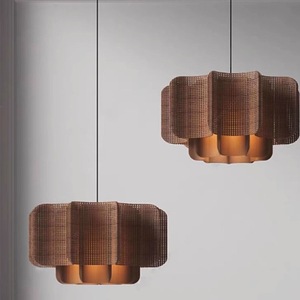
The Kingdom of Morocco has positioned itself as North Africa's premier hub for luxury tourism, infrastructure development, and high-end real estate expansion. Driven by national initiatives such as Vision 2030, cities like Marrakech, Casablanca, Rabat, and Tangier are witnessing an unprecedented construction boom of 5-star hotels, luxury residential compounds, boutique Riads, and commercial office towers. At the center of this architectural transformation is a surge in demand for bespoke, high-performance lighting fixtures—specifically modern chandeliers, linear architectural LEDs, and luxury brass pendants.
To meet strict budget constraints, exacting architectural specifications, and demanding delivery schedules, Moroccan importers, MEP contractors, interior design firms, and real estate developers turn to specialized Chinese lighting OEMs and exporters. China’s lighting manufacturing cluster—centered in Guzhen and Dongguan—produces over 70% of the world’s decorative lighting. However, successfully navigating the supply chain requires deep technical knowledge regarding metal processing, electrical safety certifications, anti-corrosion treatments for coastal Atlantic environments, and trade logistics into major entry ports such as Tanger Med and Casablanca Port.
This whitepaper serves as a definitive sourcing and engineering guide for Moroccan buyers looking to establish direct factory partnerships with top-tier Chinese chandelier manufacturers.
Morocco’s unique geographical position presents distinct environmental challenges for decorative and architectural lighting. Mediterranean and Atlantic coastal cities like Tangier, Casablanca, and Agadir feature high ambient humidity, elevated airborne salt content, and seasonal temperature fluctuations. Standard commercial light fixtures with cheap electroplating or thin lacquer coatings frequently suffer from micro-pitting, brass tarnishing, and rust within 12 to 18 months of installation.
Fixtures constructed from high-grade H65 brass contain 65% copper and 35% zinc, offering superior tensile strength and inherent resistance to galvanic corrosion compared to cheap zinc alloys.
Vacuum PVD coating provides an atomic-bond protective barrier capable of surviving 96-hour neutral salt spray (NSS) testing, protecting gold and brass finishes against ocean mist.
All internal wiring, drivers, and sockets are engineered to meet 220V/50Hz grid requirements, carrying CE, RoHS, and NMIS compliance for smooth customs clearance.
| Material Class | Tensile Strength | Corrosion Resistance Rating | Recommended Moroccan Application | Lifespan Expectancy |
|---|---|---|---|---|
| Solid Machined H65 Brass | > 380 MPa | Class A+ (PVD Treated) | Coastal Villas, 5-Star Hotel Exteriors & Lobbies | 25+ Years |
| Natural Spanish Alabaster | N/A (Stone) | Class A (Impervious to Humidity) | Luxury Dining Halls, Riad Courtyards | Lifetime |
| Extruded Aviation Aluminum (6063) | > 210 MPa | Class A (Anodized / Powder Coated) | Linear LED Architectural Commercial Offices | 15+ Years |
| Standard Die-Cast Zinc Alloy | ↕ 150 MPa | Class C (Prone to Pitting) | Low-Budget Indoor Residential (Not Recommended Coastal) | 3 - 5 Years |
Modern Moroccan architecture is characterized by a sophisticated blend of classical Moorish geometry (Zellij tilework, horseshoe arches, carved plasterwork) and contemporary European minimalism. Top Chinese exporters have adapted their product lines to harmoniously integrate into these distinct spatial environments:
A. Modernized Wabi-Sabi & Organic Textures in Moroccan Riads: The restoration of historic Riads in the Medina of Marrakech and Fes increasingly favors organic modernism. Fixtures utilizing natural travertine stone, hand-woven rattan, and raw alabaster (such as Items 4, 7, and 8 in our showcase) provide soft, ambient illumination (2700K - 3000K CCT) that highlights hand-carved cedar wood and tadelakt wall finishes without creating harsh visual glare.
B. High-Ceiling Atrium & Staircase Chandeliers: Luxury villas in Anfa (Casablanca) and Souissi (Rabat) feature grand double-height entry foyers. Custom glass-drop chandeliers (Item 5) engineered with heavy-duty ceiling mounting plates, safety aircraft cables (SUS304), and modular LED light sources provide dramatic visual impact while allowing simple maintenance access.
C. Linear Architectural Systems for Commercial Spaces: As Tangier and Casablanca consolidate their status as regional financial and tech hubs, commercial office spaces require clean, energy-efficient lighting. Continuous linear LED pendant systems (Item 2) featuring high color rendering indices (CRI > 90) and flicker-free dimmable drivers ensure optimal visual productivity and energy efficiency.
Navigating the Chinese manufacturing landscape requires discerning between direct OEM/ODM factories, trading companies, and small assembly workshops. The table below outlines key operational differences critical for Moroccan procurement teams:
| Evaluation Parameter | Tier 1 Direct OEM/ODM Factory | Third-Party Trading Company | Small Assembly Workshop |
|---|---|---|---|
| Tooling & Customization | In-house CAD/CAM, CNC lathe & custom glass molding | Outsourced; limited engineering control | Catalog stock only; no custom capability |
| Quality Control (QC) | IQC, IPQC, and 100% aging test under 220V load | Visual spot-check prior to shipment | Minimal or no aging testing |
| Customs Documentation | Full CE, RoHS, IECEE test reports for COC/NMIS | Relies on third-party suppliers' documents | Incomplete or forged certifications |
| Production Lead Time | 25 - 35 Days (Controlled Schedule) | 35 - 50 Days (Subject to vendor delays) | Unpredictable |
| Warranty & Spare Parts | 5-Year Structural Warranty; free replacement parts | Negotiable; often difficult to claim | None |
Before issuing a Letter of Credit (LC) or wire transfer (T/T) to a Chinese exporter, Moroccan buyers should execute a comprehensive factory audit adhering to the following protocol:
1. Verification of Manufacturing Infrastructure: Ensure the factory possesses dedicated metal spinning machines, hand-soldering stations, automated polishing lines, and a dust-free powder coating booth. Factories operating single-roof operations guarantee consistent batch-to-batch finishing quality.
2. Photometric & Electrical Safety Verification: Request IES light distribution files for lighting design simulation in Relux/Dialux. Verify that all LED drivers utilize reputable international component brands (e.g., MeanWell, Lifud, Tridonic) certified for 220V/50Hz input with active Power Factor Correction (PFC > 0.95).
3. Export Packaging Standardizing for Ocean Freight: Ocean shipping from Shenzhen or Ningbo to Tanger Med Port requires robust packaging. Ensure products are packed using 5-ply corrugated outer cartons, high-density drop-tested EPE molded foam, and reinforced wooden crates for fragile glass components.
Drawing on over a century of traditional metal-crafting principles, our partner production facilities maintain an unyielding commitment to single-roof manufacturing integrity. Unlike assembler brands that outsource stamping, buffing, and plating to disaggregated sub-contractors, every step of our production sequence—from raw brass tube rolling to hand-soldering and final electrical testing—is conducted under rigorous internal supervision.


Whether modifying canopy diameters to fit traditional plaster medallions, extending drop-rod suspension lengths for vaulted ceilings, or matching custom patina finishes to historical restoration specifications, our engineering team collaborates directly with Moroccan architects to deliver turn-key lighting solutions.
Access our complete 2026 Export Collection, engineering spec sheets, and wholesale pricing for Moroccan commercial, hospitality, and residential projects.