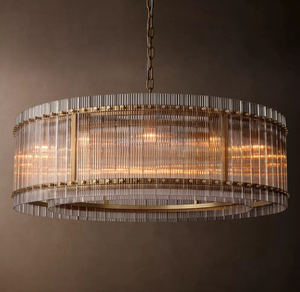
 Solid Brass
Living Room Solid Brass Glass Pendant Light Modern Round Chandelier
Precision hand-buffed solid brass structure featuring custom blown clear glass globes. Ideal for grand dining areas and luxury residential foyers.
Quantifiable benchmarks set by premier glass pendant lighting suppliers for commercial, hospitality, and luxury residential architectural specifications worldwide.
Explore our benchmark glass pendant series, crafted using hand-drawn solid brass frames, optical-grade borosilicate and soda-lime glass, and customizable LED driver engines.
Solid Brass
Precision hand-buffed solid brass structure featuring custom blown clear glass globes. Ideal for grand dining areas and luxury residential foyers.
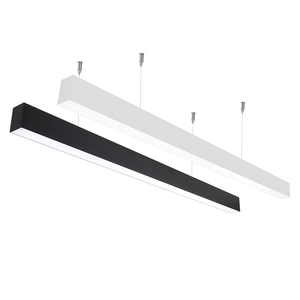 Commercial Architectural
40W high-efficacy linear system with 30K/40K/65K switchable CCT. Features matte black anodized frame with optical frosted diffuser profile.
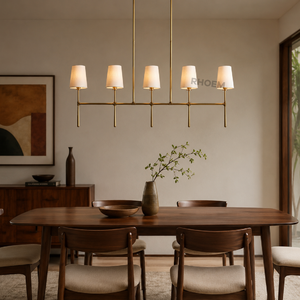 Designer Hotel Project
Dual-layer ambient lighting combining textured natural linen diffusers with precision glass accents for upscale hospitality projects.
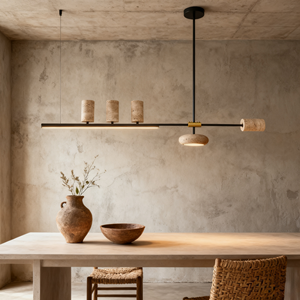 Natural Travertine Hybrid
Organic yellow travertine stone coupled with warm optical glass. Perfect for boutique craft rooms, bars, and warm minimal interiors.
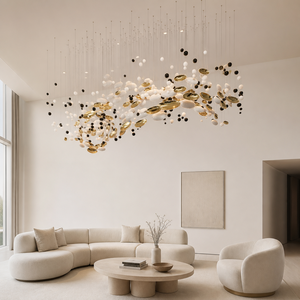 Bespoke Staircase
Customizable vertical drop chandelier engineered with hand-cast glass diffusers and modular suspension cables for high-ceiling voids.
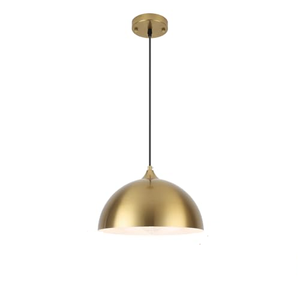 Modern Classic
Mid-century modern dome glass silhouette with hand-soldered brass trim. Engineered for kitchen island downlighting and dining accent illumination.
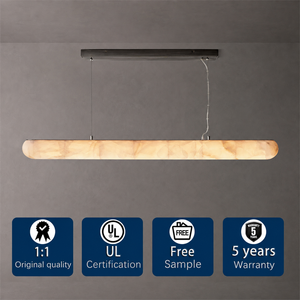 Alabaster & Iron
Carved natural alabaster stone infused with glass elements over a hand-finished iron chassis. Compatible with standard 0-10V/TRIAC dimming.
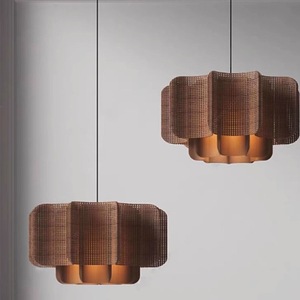 Zen Biophilic
Artisanal organic cloud profile combining hand-woven natural rattan texture with inner glass globe light distribution for commercial dining environments.
Key criteria for commercial lighting specifiers, OEM buyers, and architectural firms when auditing global glass pendant light manufacturers.
In the high-end commercial, hospitality, and residential architectural sectors, selecting the right glass pendant manufacturers & suppliers extends far beyond visual aesthetics. Glass pendant luminaires operate at the intersection of thermal management, mechanical stress distribution, optical diffusion clarity, and electrical safety compliance. For procurement officers and interior designers, sourcing low-grade decorative glass fixtures often results in field failures—including thermal shock fracturing, uneven glass wall thickness causing optical distortion, and rapid discoloration of plated metal finishes.
To establish a resilient supply chain, professional specifiers must evaluate glass pendant suppliers across three non-negotiable vectors: material composition, single-facility structural fabrication, and rigorous electrical component integration.
The core optical element of any pendant fixture is its glass enclosure. Premier manufacturers utilize two distinct glass categories based on project requirements:
A decorative glass pendant light is only as reliable as its supporting metalwork. Subpar suppliers frequently use die-cast zinc alloys or thin cold-rolled steel susceptible to oxidation, sagging, and finish peeling. Top-tier manufacturers—drawing from heritage methodologies established over a century of craft—rely on heavy-gauge solid brass and structural steel. Key mechanical processes include:
Tracing our heritage back to 1905, our manufacturing philosophy stands apart from standard import distributors. Operating out of our dedicated Chicagoland facility in Bellwood, Illinois, every glass pendant fixture is engineered, hand-rolled, hand-soldered, buffed, and assembled under a single roof.
This integrated single-facility approach gives architectural specifiers complete control over custom stem lengths, bespoke arm configurations, custom glass pairings, and finish matching across entire hotel or estate floorplates.
Raw brass stock to final wired fixture, inspected and certified at one facility.
Adjust scale, glass type, drop length, and finish to exact drawing spec sheets.
Rapid prototype sampling and fast lead times for commercial & multi-family bids.
UL 1598, CSA, and CE electrical safety testing standards supported globally.
Unlike off-the-shelf catalog traders, every custom glass pendant light undergoes rigorous manual steps carried out by experienced artisans:
Understanding macroeconomic shifts, material innovations, and architectural specification changes shaping global lighting procurement over the next decade.
Architects are increasingly specifying biophilic and tactile materials over sterile monochromatic metal finishes. The modern market demand has pivoted strongly toward hybrid glass pendants that integrate natural yellow travertine, carved alabaster stone, and hand-woven rattan elements. Suppliers capable of manufacturing multi-material pendant structures without compromising structural balance or thermal dissipation gain a decisive competitive advantage.
Commercial specifiers no longer accept static color temperatures in large-scale installations. The integration of CCT switchable engines (3000K/4000K/6500K) and continuous 0-10V/DALI-2 tunable white drivers within sleek glass linear pendant profiles allows hotel lobbies, executive boardrooms, and high-density office layouts to adjust color spectra dynamically according to circadian lighting principles.
Departing from perfectly symmetrical factory glass spheres, luxury residential and resort projects are demanding organic, "imperfect" glass silhouettes—such as cloud shapes, bubble textures, and ripple patterns. Master glass manufacturers capable of executing consistent wall thickness across complex organic molds ensure high optical efficacy while satisfying designer demand for artisan character.
Environmental certifications (LEED v4.1, WELL Building Standard) require lighting suppliers to provide complete material transparency. Glass pendant suppliers are adopting lead-free glass formulations, low-VOC ceramic coatings, and 100% recyclable aluminum/brass structural elements. Factory packaging is also transitioning from non-biodegradable EPS foam to custom-engineered molded pulp inserts for transit protection.
How advanced optical engineering, digital manufacturing technology, and intelligent control protocols are redefining glass pendant performance.
Integrating microscopic laser-etched prisms into clear glass inner layers reduces Unified Glare Rating (UGR < 19) while maintaining over 92% luminous transmission for high-efficiency task lighting.
Next-generation glass pendants utilize custom COB (Chip-on-Board) engines achieving CRI > 97 Ra and R9 > 90, rendering interior fabrics, wood veneers, and stone textures with museum-grade accuracy.
Concealing compact Casambi, Bluetooth Mesh, or Zigbee control nodes inside the glass pendant canopy allows individual addressability and automated daylight harvesting without external wiring control lines.
Direct technical answers for commercial buyers, lighting designers, and trade specifiers evaluating glass pendant light suppliers.
For North American specifications, verify complete fixture listings under UL 1598 (Luminaires) or CSA C22.2 No. 250.0. For European and international projects, CE certification adhering to EN 60598-1 and EN 60598-2-1 is mandatory. Ensure the manufacturer provides dielectric withstand test reports, grounding continuity verifications, and IP ratings (IP20 standard dry indoor, IP44 for bathroom vanity/damp locations).
Trusted manufacturers utilize ISTA-3A rated drop-test packaging protocols. Custom high-density polyethylene (HDPE) expanded foam molds are CNC-cut to match the precise geometry of the glass shade and brass chassis. Glass components are shipped unattached from heavy metal frames with dedicated shock-absorption buffers, reducing field breakage rates below 0.2% across international freight lanes.
Yes. Because premier suppliers own their tooling, stamping dies, and finishing lines under a single roof, catalog fixtures can be modified significantly. Engineering teams routine adjust stem lengths, extend suspension cables up to 20+ feet for hotel staircases, alter multi-light canopy layouts, substitute mouth-blown clear glass for frosted or amber glass, and match custom client finish chips.
Standard catalog stock items typically feature quick-turn dispatch within 5 to 10 business days. Custom architectural modifications (e.g., custom finish matching or bespoke glass drops) carry production lead times of 4 to 6 weeks. MOQ requirements vary by product line; standard items start at 5–10 units per SKU, while fully bespoke OEM glass moldings may require project batch commitments reviewed case by case.
Hand-blown glass exhibits superior visual depth, organic micro-variations, and seamless edge transitions without mold mold-parting lines. Machine-pressed glass provides exact dimensional uniformity and lower unit costs for high-volume commercial budgets. Premier suppliers offer both options, guiding specifiers toward the ideal balance between budget and visual sophistication.
Connect with our technical engineering sales team to request physical finish samples, CAD/IES photometric files, or custom quotation schedules for your upcoming commercial, hospitality, or residential development.