
Executive Procurement Summary: Navigating Global Wall Sconce Manufacturing
In the contemporary architectural and interior design ecosystem, wall sconces have evolved from secondary accent lights into primary architectural statements and key vertical illuminators. Sourcing decorative wall sconces for commercial hospitality projects, luxury multi-family developments, and high-end residential estates requires a deep technical understanding of metallurgy, optical engine design, UL/ETL safety compliance, and OEM/ODM factory capabilities.
This industry white paper, compiled by senior architectural lighting directors and supply chain analysts, benchmarks the top manufacturing methodologies, evaluates essential factory selection criteria, outlines future purchasing trends from 2025 to 2030, and provides solutions to complex B2B procurement challenges.
Information Gain Insights: Solid Brass vs. Die-Cast Aluminum Sconce Construction
While low-cost commercial lighting frequently utilizes die-cast zinc or thin aluminum alloys, premium architectural specifiers insist on heavy-gauge C26000 cartridge brass. Brass manufacturing involves hand-rolling, silver brazing, and multi-stage hand buffing. This prevents subsurface pitting, provides superior thermal distribution for LED drivers, and enables heirloom-grade hand-applied patinas (such as antique bronze, polished nickel, and gunmetal) that age gracefully without peeling or corroding.
Four Generations of Craftsmanship: The In-House Manufacturing Blueprint
True manufacturing authority stems from maintaining complete operational control under one roof. Unlike pure trading companies or asset-light assembly operations, leading factories—typified by heritage American brands like Framburg Lighting (established in Chicagoland in 1905)—rely on vertically integrated hand fabrication. This single-roof discipline ensures that every wall sconce and architectural light fixture adheres to strict structural and aesthetic tolerances.
1. Hand-Rolling & Forming
Flat heavy-gauge brass sheets and seamless tubing are rolled and shaped on specialized machinery to create structurally rigid backplates, arms, and custom optical housing profiles.
2. Precision Hand-Soldering
Rather than relying on mechanical rivets or synthetic adhesives, structural metal joints are silver-brazed and hand-soldered. This creates a monolithic metallic bond capable of enduring environmental stress.
3. Multi-Pass Surface Buffing
Before entering the finishing line, every metallic component undergoes multiple passes of hand-buffing to eliminate microscopic tooling marks, ensuring even reflectivity and finish adhesion under high-lux illumination.
4. Hand-Applied Chemical Patinas
Finishes are not merely powder-coated; chemical patinas, electroplated nickel, matte black oxided layers, and clear protective baked lacquers are applied to yield rich depth and color consistency.
5. 100% Assembly & Hi-Pot Testing
Every completed sconce undergoes 100% electrical high-voltage insulation (Hi-Pot) safety testing, photometric verification, and structural inspection prior to commercial packaging.
6. Custom Specifier Adapting
Engineers alter arm drops, backplate scale, shade glass density, and dimming driver specs based directly on CAD drawings submitted by commercial procurement managers.
Technical Benchmark Matrix: Tier-1 Sconce Manufacturers vs. Tier-3 Commodity Suppliers
Evaluating manufacturers requires examining parameters beyond upfront unit costs. The matrix below contrasts high-gain architectural factories against mass-market commodity producers:
| Evaluation Parameter | Tier-1 Architectural Manufacturers | Tier-3 Mass-Market Suppliers |
|---|---|---|
| Primary Structural Metal | Solid Brass (C26000), Forged Iron, Heavy Extruded 6063 Aluminum | Die-Cast Zinc Alloy, Thin Sheet Metal (<0.8mm), Recycled Scrap Aluminum |
| Joinery Technique | Silver-brazed Hand Soldering & Precision CNC Threading | Glued Joints, Spot-Welded Tabs, Plastic Snap Fits |
| LED Engine Specs | CRI >95, R9 >80, 2-Step MacAdam Ellipse Binning, 50,000h L70 | CRI >80, 5-Step Binning, Unbranded COB Chips, High Thermal Degradation |
| Diffuser Materials | Genuine Spanish Alabaster, Natural Yellow Travertine, Kiln-Cast Art Glass | Injection-Molded Acrylic (PMMA), Polycarbonate, Thin Molded Soda-Lime Glass |
| Electrical & Dimming | Universal 120-277V, TRIAC, 0-10V, DALI-2, Push-Dim, Class 2 Drivers | Fixed Voltage (120V or 230V only), Non-dimmable or basic TRIAC with flicker |
| Certification & Compliance | UL 1598, CSA C22.2, CE, RoHS, Title 24 JA8 Compliant, Wet-Location IP65 | Basic CE/RoHS self-declaration, Unverified driver listings |
Future Purchasing & Procurement Trends (2025–2030)
Commercial lighting procurement is undergoing a paradigm shift driven by sustainability mandates, smart building integration, and demand for raw material authenticity. B2B buyers must align their supply chain strategy with four key macro trends:
1. Circular Metallurgy & Low-Carbon Supply Chains
Global architectural specifications increasingly require Environmental Product Declarations (EPDs) and Health Product Declarations (HPDs). Wall sconce manufacturers are transitioning toward 100% recyclable brass alloys and closed-loop water filtration systems during electroplating and chemical patination. Procurement departments prioritizing suppliers with verified low-carbon metallurgical sourcing will gain a distinct advantage in green building certifications (LEED v4.1, WELL Building Standard).
2. Integrated Smart Control Protocols (Matter, Zigbee 3.0 & DALI-2)
Traditional wall sconces operated purely on phase-cut line voltage dimming. Future-proof wall lights now incorporate compact, low-voltage smart drivers directly into the backplate mounting canopy. Embedded wireless protocols allow individual addressability, dynamic circadian rhythm color-tuning (2200K to 6000K), and seamless integration into automated commercial building management systems (BMS).
3. Organic Material Fusion: Natural Stone, Alabaster & Woven Artistry
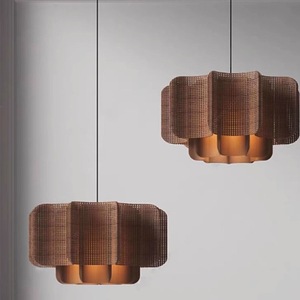
Design intent is shifting away from cold industrial metals toward tactile, organic textures. Sconces combining carved Spanish alabaster, yellow travertine, micro-textured ceramics, and hand-woven rattan diffusers are capturing significant market share in boutique hotel lobbies and luxury multi-family projects. Manufacturers with dedicated stone-carving and glass-casting workshops can fulfill custom specs without relying on third-party component sourcing.
4. Supply Chain Resilience & Hybrid Nearshoring Models
To mitigate international freight volatility and extended lead times, global procurement teams are adopting hybrid sourcing strategies. While core component forging and CNC machining may occur in primary Asian industrial centers, final custom finish application, custom stem adjustments, electrical assembly, and quality assurance are frequently completed within regional regional hubs (such as Chicagoland in North America or Central Europe).
Technological Innovations in Wall Sconce Optical Engineering
Modern wall sconces serve a dual purpose: delivering indirect vertical illuminance (wall washing) and contributing to decorative interior geometry. Achieving these visual outcomes requires advanced optical engineering:
Dark-Sky & Cut-Off Optics
For outdoor wall sconces and perimeter corridors, modern factories utilize micro-reflector optics that direct light strictly downward and horizontally, preventing light pollution while complying with stringent Dark-Sky Association standards.
Thermal Dissipation & Heatsink Co-Design
Integrating high-output LED arrays into compact wall sconce housings demands advanced thermal management. High-performance sconces feature hidden die-cast aluminum heat sinks thermally bonded to the metal chassis, maintaining junction temperatures below 65°C to preserve color consistency and operational lifespan.
Wall Sconce Sourcing & Manufacturing FAQ
Below are critical technical and commercial answers for architects, lighting specifiers, importers, and procurement officers selecting wall sconce manufacturing partners:
1. What minimum certifications are required for wall sconces in commercial hospitality projects?
For North America, wall sconces must carry UL 1598 or CSA C22.2 No. 250.0 safety listings for dry, damp, or wet locations (depending on room placement, such as guest bathrooms or exterior corridors). In the European Union, CE marking, RoHS compliance, and EN 60598 certification are mandatory. High-end residential projects in California also require Title 24 JA8 high-efficacy compliance.
2. Can catalog wall sconces be customized for specific project dimensions and finishes?
Yes. OEM/ODM tier-1 manufacturers owning their tooling line can adjust backplate mounting dimensions, extend arm projections, increase or decrease socket counts, incorporate custom glass diffusers, and match physical metal finish samples to align with client millwork or plumbing hardware.
3. How do manufacturers handle IP ratings for bathroom vanity and outdoor wall sconces?
Bathroom vanity sconces mounted near water sources generally require IP44 damp-location ratings, featuring silicone gaskets around glass diffusers and sealed backplates. Outdoor sconces require IP65 or IP67 ratings, incorporating weep holes for moisture drainage, UV-inhibited powder coatings, and sealed electrical junction boxes to prevent liquid ingress.
4. What is the typical lead time for custom production orders of wall sconces?
Standard catalog production runs typically require 4 to 6 weeks. Custom engineered sconces—involving 3D CAD modeling, custom sample sign-off, photometrics, and specialized plating—range from 8 to 12 weeks depending on material availability (such as specialized alabaster or hand-blown art glass).
5. What is the difference between lost-wax brass casting and CNC machined brass for sconce arms?
Lost-wax (investment) casting allows for complex, organic, and historical sculpted brass forms with intricate relief details. CNC machining cuts high-purity brass rod or block stock into precise, crisp geometric shapes ideal for modern architectural linear sconces. Both methods offer far greater structural integrity than die-cast zinc.
6. How is color consistency maintained across large multi-room wall sconce orders?
Leading factories source LED chips strictly within 2-step or 3-step MacAdam Ellipse binning. This guarantees that color temperature variations across hundreds of individual wall sconces are imperceptible to the human eye, maintaining a uniform 2700K or 3000K illumination across entire hotel corridors.
Partner with Premier Architectural Lighting Engineering
Whether you are specifying custom solid brass sconces for a luxury hotel portfolio, sourcing natural alabaster wall lights for a multi-family residence, or seeking an authorized OEM/ODM manufacturing partner, our technical engineering team provides comprehensive support from drawing review to final delivery.