
Talk to our team800-428-5367
Engineered for commercial contractors, specifiers, and distributors. Explore our catalog-ready and customizable OEM/ODM pendant light solutions.
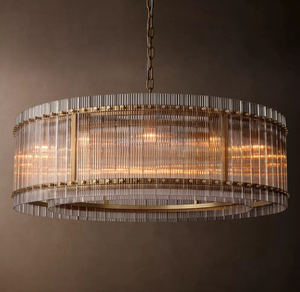
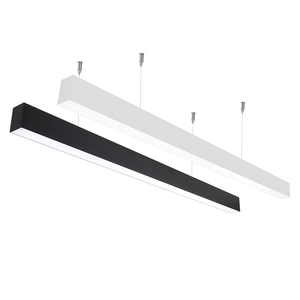
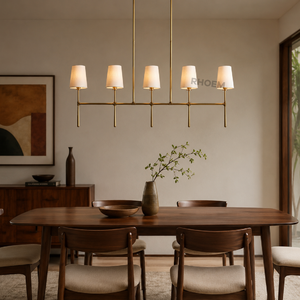
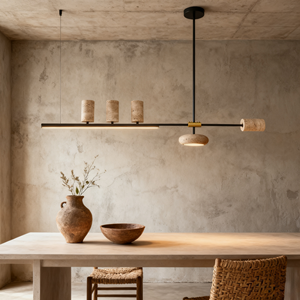
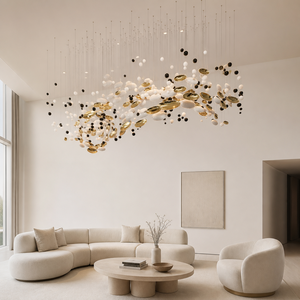
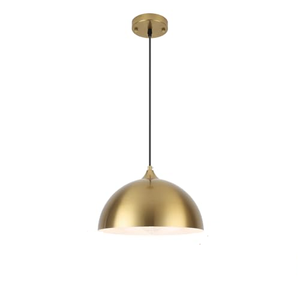
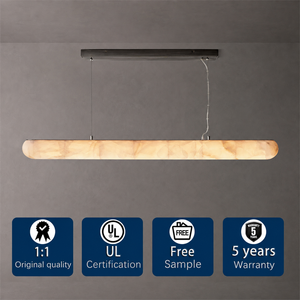
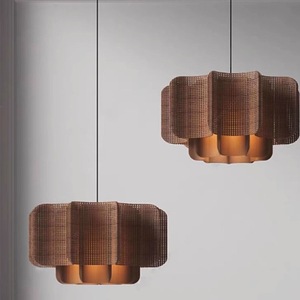
Selecting the optimal pendant light manufacturer is a critical strategic decision for architectural specifiers, luxury commercial developers, procurement agencies, and decorative lighting brands. The decorative luminaire market requires an intricate balance between artistic design integrity, structural safety, optical efficiency, and metallurgical durability. In this executive whitepaper guide, we evaluate the benchmark manufacturing standards, quality audit metrics, and global OEM/ODM capabilities across the top lighting factories worldwide.
SEO & Procurement Insights: High-end commercial sourcing is shifting rapidly away from lightweight stamped aluminum fixtures toward heavy-gauge solid brass, natural mineral stone (alabaster, travertine), and integrated smart-dimmable linear architectures. Buyers must verify factory toolmaking rights, UL/ETL/CE certification authenticity, and structural soldering integrity before placing contract-scale orders.
When auditing top 10 pendant light factories in North America, Europe, and Asia, commercial buyers should prioritize five core engineering dimensions:
Premier factories utilize H62 solid brass, heavy-gauge cold-rolled steel, and certified natural alabaster. Reject suppliers relying on low-density zinc alloys prone to pitting and corrosion.
Rigid, serviceable structures demand hand-rolled tubing and silver-brazed or soldered metal joints rather than mechanical glue or plastic press-fits.
Top-tier linear and LED pendants integrate Flicker-Free drivers (PF > 0.95), MacAdam 3-Step Ellipse LED chips, CRI > 90, and DALI-2 / 0-10V dimming compliance.
Rooted in over a century of American lighting craft since 1905, our manufacturing methodology stands apart from modern mass-market importers. Operating from our dedicated Chicago-area factory in Bellwood, Illinois, every single fixture is drawn in-house, tooled in-house, and crafted under a single roof. This centralized single-roof model guarantees absolute quality control from raw brass billet to final freight shipment.
Most commercial decorative lighting imported today is mass-assembled using glue or thin press-fitted hardware. In contrast, our workshop practices a disciplined five-stage sequence for every pendant luminaire:
| Manufacturing Stage | Technical Process Description | Quality Benchmark & Commercial Benefit |
|---|---|---|
| 1. Hand Rolling & Forming | Flat brass and structural steel stock are hand-rolled and formed using proprietary tooling equipment. | Prevents material stress fractures; maintains uniform wall thickness on custom fixture curves. |
| 2. Precision Soldering | Structural joints are hand-soldered and silver-brazed rather than crimped or glued. | Yields exceptional structural integrity capable of supporting heavy hand-blown glass or natural stone. |
| 3. Multi-Stage Hand Buffing | Every metal face is hand-buffed across sequential grit wheels before entering finish lines. | Eliminates microscopic tool marks, ensuring perfect finish adhesion and optical reflectivity under illumination. |
| 4. Artisan Finish Application | Hand-applied electroplating and hand-rubbed antique brass, bronze, polished nickel, and matte black tones. | Achieves exact finish matching across multi-family fixture collections (chandeliers, sconces, and pendants). |
| 5. High-Pot Assembly & QC | Wiring, socket fitting, driver integration, thermal testing, and 100% dielectric high-pot inspection. | Guarantees complete UL 1598 / CE safety compliance before factory seal and crate dispatch. |
Custom Architectural Specification: Because we own all primary tooling and finish lines, we routinely re-scale fixture diameters, alter arm counts, extend drops/chains, substitute natural alabaster/travertine shades, and match architectural finish swatches provided by interior design teams.
The global contract lighting market is experiencing a profound paradigm shift driven by sustainable building codes (LEED v4.1, BREEAM), occupant wellness standards (WELL Building Standard), and evolving architectural interior aesthetics. Sourcing officers and commercial buyers must prepare for three pivotal industry trends over the coming decade:
As seen in modern architectural installations, natural yellow travertine stone and Spanish alabaster are replacing synthetic plastic and acrylic diffusers. Natural stone offers organic, non-repeating vein patterns that diffuse light with exceptional warm color rendering. Sourcing teams must ensure factories employ precision CNC waterjet diamond saws and sealant coats to prevent stone oil absorption and thermal fracturing over extended lamp operational life.
Commercial workspace and hospitality design increasingly demand versatile linear fixtures. Multi-CCT switchable drivers (selectable 3000K / 4000K / 6500K) allow distributors to dramatically reduce SKU holding inventory while providing contractors with field-adjustable color temperatures. Furthermore, integration with wireless Bluetooth Mesh controls (e.g., Casambi, Silvair) and DALI-2 bi-directional feedback drivers is becoming standard for luxury commercial specifications.
Global environmental regulations now mandate extended product lifespans and modular serviceability. Leading pendant light factories are abandoning encapsulated permanent glued assemblies in favor of mechanical modularity: replaceable LED light engines, detachable driver trays, and low-VOC powder coat finishes. This guarantees fixtures can be serviced on-site without removing the structural canopy or replacing the entire architectural installation.
Below are critical technical and commercial answers for architects, project engineers, hotel developers, and lighting distributors seeking custom OEM/ODM pendant light manufacturing.
Discuss your contract lighting requirements, request catalog pricing, or request custom engineering support with our engineering sales team in Bellwood, Illinois.