
Talk to our team800-428-5367
Engineered for luxury hospitality, high-end residential developments, and custom architectural projects. Designed to international ETL/UL/CE compliance standards.
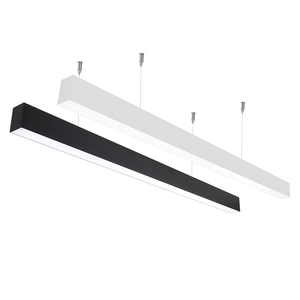
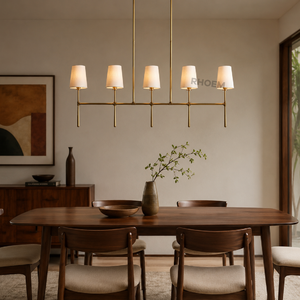
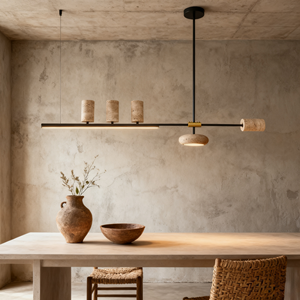
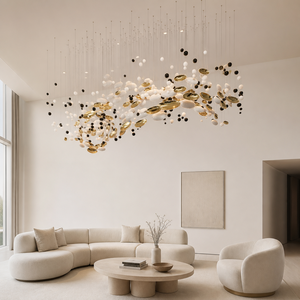
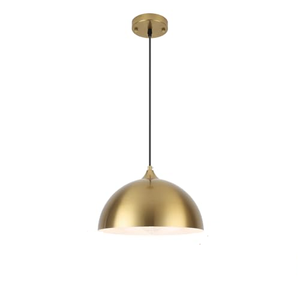
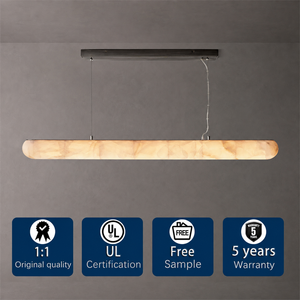
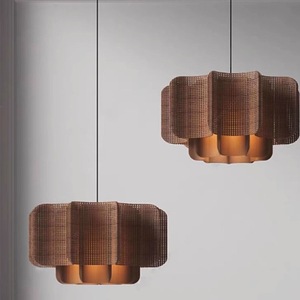
Bridging century-old metalworking traditions with advanced modern photometric engineering. We provide total single-roof accountability from initial CAD design to final assembly.
Unlike cheap die-cast zinc alternatives, our architectural fixtures are constructed from heavy-gauge H65 solid brass and structural cold-rolled steel. Every component is hand-rolled, seamlessly soldered, and hand-buffed to eliminate surface imperfections.
We specialize in processing genuine organic minerals including Spanish Alabaster, Yellow Travertine, hand-blown seeded glass, and organic woven rattan. Each piece is sealed against UV degradation and thermal stress, creating unique bespoke lighting assets.
We own our tooling lines and plating facilities. We adjust diameters, modify arm configurations, scale canopy drop lengths, and match finish color chips (such as hand-rubbed antique brass, oil-rubbed bronze, brushed nickel, or matte black) according to exact BIM specifications.
Our LED engines deliver high CRI (>95) with flicker-free operation (compliant with IEEE 1789). Integrated optics support multi-CCT switching (3000K/4000K/6500K), smooth 0-10V dimming, Phase/Triac control, and full DALI-2 smart building automation integration.
Every single fixture undergoes a rigorous 5-stage quality audit: dimensional CAD verification, 2000V high-voltage dielectric insulation testing, 48-hour continuous burn-in test, 72-hour salt-spray anti-corrosion evaluation, and drop-tested protective packaging validation.
Designed for quick-turn hospitality and residential development schedules. We offer complete knock-down (KD) structural engineering for streamlined container logistics, under 0.5% transport breakage guarantees, and full localized project support for international contractors.
An in-depth whitepaper examining global supply chain shifts, material innovations, energy efficiency mandates, and spatial lighting design philosophies for international commercial specifiers.
The global luxury decorative lighting market is undergoing a structural transformation driven by architectural evolution, stringent energy policies, and a shift in user design preferences. As international buyers evaluate manufacturing partners in China, procurement strategies have migrated from simple price-per-unit metrics to total value engineering, supply chain transparency, and material longevity.
One of the most notable design trends across hospitality resorts, high-end residential villas, and commercial real estate is the incorporation of raw, tactile materials into architectural lighting fixtures. In response to corporate sustainability goals and biophilic design movements, specifiers are moving away from cheap synthetic plastics and painted acrylic shades.
Instead, natural stones such as Spanish Alabaster and Italian Travertine are rapidly becoming the preferred media for decorative chandeliers and linear island pendants. Because natural alabaster features intrinsic mineral veining, each carved shade transmits light through varying translucencies, casting warm, soothing optical gradients. Manufacturing these natural stones requires specialized diamond-tooled CNC carving equipment and vacuum resin encapsulation techniques to prevent fracturing during international shipping—a core technical capability that separates top-tier Chinese suppliers from low-cost workshops.
Similarly, the resurgence of Wabi-Sabi and Zen-inspired minimalist aesthetics has created widespread demand for natural woven rattan, unglazed ceramic stoneware, and hand-cast glass drops. Suppliers capable of seamlessly fusing raw brass structural frames with genuine natural alabaster or artisan glass hold a distinct competitive edge in global contract sourcing.
The transition to solid-state LED illumination has progressed beyond simple bulb replacements. Modern architectural projects require streamlined, thin linear pendants that provide ultra-uniform downlighting alongside ambient uplighting, all while maintaining slim structural profiles under 25mm in width.
Key technological developments dominating the 2026–2030 procurement cycle include:
Material integrity remains the fundamental baseline of luxury decorative lighting quality. When sourcing decorative chandeliers and wall sconces for humid coastal resorts, high-traffic commercial spaces, or premium residential properties, material selection directly dictates long-term performance and brand reputation.
| Evaluation Parameter | Solid Brass (H65 Grade Alloy) | Standard Electroplated Steel | Die-Cast Zinc / Aluminum Alloys |
|---|---|---|---|
| Structural Durability | Exceptional structural memory; resilient against bending, warping, or cracking under mechanical load. | Moderate rigidity; prone to micro-bending if gauge is unoptimized. | Brittle structural profile; prone to stress fractures under high tension. |
| Corrosion Resistance | Immune to rust; highly resistant to salt-air oxidation when sealed with electrophoretic lacquer. | Susceptible to edge rust if surface plating is scratched or degraded. | Moderate corrosion resistance; subject to white oxidation over prolonged exposure. |
| Finish Depth & Warmth | Deep, authentic luster; can be hand-buffed, antiqued, or patinated with true metal depth. | Mirror-like artificial sheen; lacks natural metal warmth and tactile depth. | Requires heavy powder coating; flat visual finish without natural metal grain. |
| Custom Fabrication | Highly malleable; allows manual tube rolling, hand-soldering, and custom profile adjustments. | Requires expensive stamping dies; high MOQ constraints for non-standard sizing. | Requires complex mold tooling; limited customization flexibility for small runs. |
| Lifecycle Value | 50+ Year lifespan; can be repeatedly refinished, rewired, and restored. | 5–8 Year commercial lifecycle before visual surface oxidation manifests. | 3–5 Year lifecycle; difficult to repair once structural joints degrade. |
In response to global logistics volatility and tighter project completion windows, international lighting buyers are moving away from fragmented supply networks. Sourcing components from separate raw-material vendors, plating shops, glass blowers, and assembly workshops introduces cumulative lead-time delays, inconsistent color tone matching, and split quality accountability.
Partnering with a single-roof China manufacturer—operating consolidated in-house metal forming, hand-buffing, multi-stage electroplating, assembly, and photometric lab testing—eliminates inter-factory communication gaps. It empowers specifiers to request custom physical finish chips, modify stem lengths for vaulting ceilings, and adjust arm numbers without delaying factory delivery timelines.
Every fixture produced in our manufacturing facility undergoes a rigorous manual and automated fabrication sequence to guarantee structural perfection and flawless aesthetic execution.
Flat solid brass and steel stocks are precision laser-cut and manually shaped on specialized tube-rolling equipment to form fluid arms, structural rims, and custom canopy components.
Structural metal joints are silver-brazed and hand-soldered rather than spot-welded or mechanically crimped, ensuring a seamless, rigid load-bearing structure capable of supporting heavy glass or natural stone shades.
Every metallic surface is meticulously hand-buffed across multiple wheel grits to strip tooling lines and surface oxidation, preparing the metal for uniform finish absorption and optical reflection.
Fixtures undergo multi-layer electroplating—including real brass, champagne gold, antique bronze, or brushed nickel—followed by nano-clear electrophoretic lacquering to lock out humidity and salt-air tarnishing.
Assembled luminaires are subjected to 2000V high-pot electrical safety testing, total luminous flux integration sphere measurement, and custom drop-tested foam enclosure packing designed for international air/sea freight.
Engineering parameters available for commercial project specifiers, lighting importers, hospitality developers, and interior design firms.
| Specification Category | Standard Catalog Specifications | Bespoke Customization Options (OEM/ODM) |
|---|---|---|
| Structural Metals | H65 Solid Brass, High-Grade Steel, Machined Aluminum | Stainless Steel 316 (Coastal Grade), Wrought Iron, Cast Bronze |
| Diffuser & Shade Media | Hand-blown Clear/Seeded Glass, Natural Alabaster, Travertine, Linen | Custom Color-Tinted Glass, K9 Crystal Elements, Natural Woven Fibers |
| Finish Library | Polished Brass, Satin Nickel, Matte Black, Antique Bronze, Gunmetal | Custom RAL Powder Coating, Hand-Rubbed Patinas, Physical Finish Chip Matching |
| Lighting Engines | SMD LED Arrays, E26/E27 Socket Systems, G9/GU10 Architectures | High CRI (98+), Tunable White (2700K–6500K), Dim-to-Warm Technologies |
| Electrical Voltage | 110V-120V (North America), 220V-240V (Europe/Asia/Australia) | Universal Wide-Voltage Drivers (90V–305V AC, 50/60Hz) |
| Dimming & Smart Controls | Triac / Phase Cut Dimming, CCT Manual Switchable | 0-10V, DALI-2, DMX512, Zigbee 3.0, CASAMBI Bluetooth Smart Mesh |
| Safety Compliance | CE, RoHS, LVD, EMC Compliant Components | Full UL, ETL, SAA, CB, SASO System Certification Support |
| Dimensional Scaling | Standard Sizes (300mm to 1200mm Diameters) | Large-Format Hotel Lobby Chandeliers (Up to 8.0 Meters Overall Diameter) |
Direct answers addressing common technical, logistics, certification, and customization queries from global lighting buyers.
Whether you are specifying a luxury hotel lobby chandelier, sourcing stock for a wholesale lighting brand, or requiring custom CAD engineering for a villa development, our engineering team is ready to support your project.
Get a Quote