
Talk to our team800-428-5367
Discover our CE-compliant, precision-crafted fixtures designed for exterior elevation, luxury hospitality, and high-end residential developments.
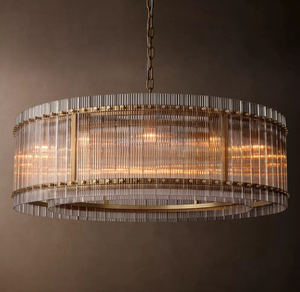
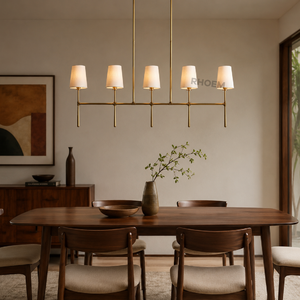
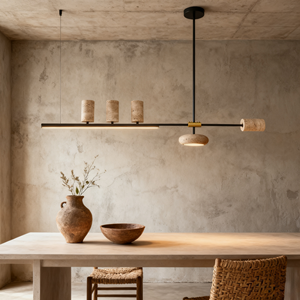
In global B2B procurement, specifying outdoor lanterns and architectural luminaires demands an uncompromised synthesis of historical artisan metalcraft, stringent thermal management, and strict European Economic Area safety compliance. Rooted in over 120 years of continuous metalworking discipline—where solid brass and steel components are rolled, silver-soldered, hand-buffed, and finished under one single operational roof—our manufacturing enterprise stands as an authoritative partner for international architects, importers, and commercial specifiers.
"CE certification is not merely a stamp of export approval; it is a structural commitment to creep-age isolation, thermal dissipation, galvanic corrosion mitigation, and electromagnetic harmony in harsh exterior climates."
Unlike commercial importers reliant on outsourced assembly, our single-facility manufacturing model preserves accountability at every stage. From hand-forming raw alloy sheets to executing ISO 9227 salt spray corrosion testing, we ensure that every outdoor lantern specified for coastal resorts, urban developments, or luxury estates maintains structural integrity and photometric consistency for decades.
Strategic foresight for lighting distributors, EPC contractors, and global procurement directors navigating evolving regulatory and environmental standards.
Global procurement is rapidly pivoting toward smart-city-ready outdoor fixtures. Modern CE-certified lanterns are no longer isolated static luminaires; they are node-ready architectural devices. Integration of standardized Zhaga Book 18 sockets paired with DALI-2 drivers allows seamless installation of wireless mesh controllers, microwave motion sensors, and daylight harvesting modules without compromising IP65/IP66 weatherproof integrity.
Atmospheric corrosivity in coastal and urban environments represents the leading cause of premature luminaire failure. Procurement standards now require severe environment endurance. Leading manufacturers utilize high-copper solid brass alloys, A360 die-cast aluminum, and multi-stage electrophoretic deposition (ED) capped with fluorocarbon powder coatings to withstand over 2,500 hours of continuous salt spray testing under ASTM B117 standards.
Regulatory frameworks across Europe and North America enforce strict light pollution mitigation. Future-ready outdoor lanterns incorporate precise optical cut-off shields, zero-uplight (U0 BUG rating) configurations, and amber CCT spectrum tuning (2200K to 2700K). This minimizes blue-light emissions, safeguarding nocturnal ecosystems while providing warm, high-CRI (>90) architectural illumination.
Under the EU Eco-design Directive (SLR/ELR regulations), B2B buyers mandate repairable and upgradable luminaire architectures. Leading CE exporters are engineering toolless access chambers, replaceable LED light engines (COB modules), and modular driver trays. This circular approach extends product lifecycles beyond 100,000 operational hours while drastically reducing lifetime carbon footprints.
Understanding the technical rigor required to earn CE compliance, Low Voltage Directive (LVD) adherence, and Electromagnetic Compatibility (EMC) certification.
Securing CE certification for outdoor lanterns requires comprehensive laboratory testing across several key directives. For architectural outdoor luminaires entering the European Economic Area and international projects adhering to IEC standards, three mandatory pillars exist:
| Technical Parameter | Standard Specification | CE Commercial Grade |
|---|---|---|
| Ingress Protection | IP54 - IP64 | IP65 / IP66 Sealed |
| Impact Resistance | IK06 - IK07 | IK09 / IK10 Tempered Glass |
| Surge Protection | 2kV - 4kV Internal | 10kV / 20kV SPD Protection |
| Corrosion Resistance | 500 Hours Salt Spray | 2500+ Hours ASTM B117 |
| Driver Efficiency | > 82% | > 92% (PF > 0.95) |
| Color Rendering (CRI) | Ra > 80 | Ra > 90 (R9 > 50) |
While mass-market fixtures rely on thin stamped sheet metal and fragile snap-in components, our single-roof production facility practices time-honored discipline coupled with modern precision engineering.
Heavy-gauge solid brass, copper, and stainless steel stock is hand-rolled and formed using proprietary tooling. This ensures structural rigidity able to withstand high wind-load ratings (up to hurricane-force Category 5 velocity vectors).
Joints are silver-brazed and hand-soldered rather than spot-welded or mechanically riveted. Silver soldering creates a unified molecular bond, eliminating air gaps and preventing moisture penetration into structural seams.
Prior to finishing, every brass surface undergoes multi-stage manual buffing with specialized compounds. Removing microscopic tool marks guarantees that subsequent protective lacquers or patina finishes read with perfectly uniform depth.
Patina applications, electroplating, and clear protective baking lacquers are executed under strictly monitored cleanroom environments. 100% of fixtures pass hi-pot electrical isolation testing and IP water-submersion checks before export packing.
Clear, authoritative answers regarding CE certification, OEM custom manufacturing, lead times, and global shipping compliance.
Every commercial order of our outdoor lanterns is accompanied by an official Declaration of Conformity (DoC) referencing EN 60598-1 (Luminaires - General requirements), EN 60598-2-1 / EN 60598-2-3 (Particular requirements for road, street, and exterior lighting), and comprehensive EMC test reports from accredited third-party labs (TÜV/SGS). Full Photometric IES/LDT files and thermal breakdown sheets are provided for engineering submittals.
While die-cast aluminum offers lightweight economy, solid brass is inherently non-ferrous and immune to galvanic exfoliation corrosion caused by saline air. In coastal environments (C5-M corrosivity zone), solid brass develops a self-passivating oxide film that protects structural integrity indefinitely, whereas aluminum relies entirely on unbroken surface coatings. For luxury resorts and marine infrastructure, solid brass delivers significantly lower lifecycle total cost of ownership (TCO).
Yes. Because we control complete in-house tooling, CNC machining, and metal-forming operations, we routinely adjust lantern dimensions, scale arm proportions, alter socket configurations (E27, GU10, integrated LED board), and configure internal drivers for universal mains voltages (110V-277V AC, 50/60Hz) or 24V DC emergency circuits based on architectural specifications.
For standard wall sconces and post lanterns, IP65 is our minimum baseline, protecting fully against low-pressure water jets from any direction and dust ingress. For exposed landscape columns, ground-level bollards, or high-vibration elevated installations, we engineer to IP66 standards using continuous molded silicone gaskets, IP68 rated cord grips, and pressure-equalizing hydrophobic breather valves that prevent internal condensation.
Standard production lead times for catalog CE-certified outdoor lanterns range between 3 to 4 weeks upon approval of shop drawings. For fully customized architectural fixtures requiring bespoke extrusion dies, specialized hand-blown glass, or custom color-matched powder coats, lead times typical range from 5 to 7 weeks, including 100% pre-shipment quality inspection and laboratory burn-in testing.
Connect with our senior engineering team to receive full CAD shop drawings, IES photometrics, CE compliance documentation, and factory-direct volume quotes for your commercial or hospitality development.
