
Talk to our team800-428-5367
Engineered for luxury hospitality, corporate offices, high-end residential complexes, and architectural projects worldwide.
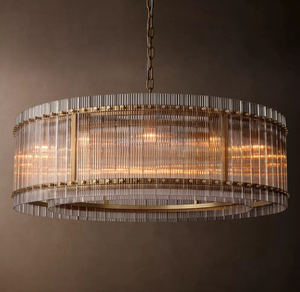
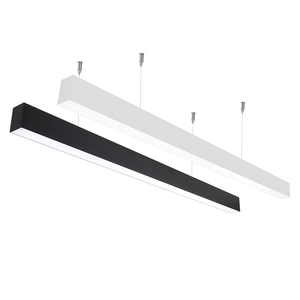
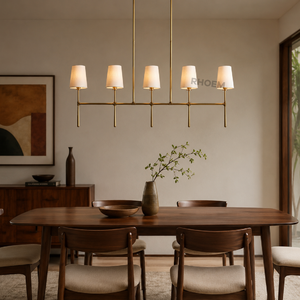
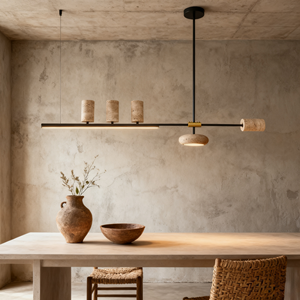
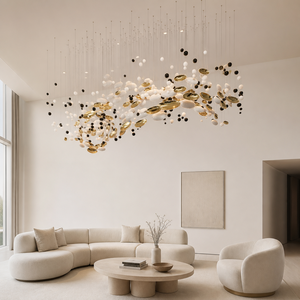
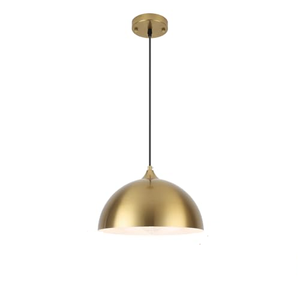
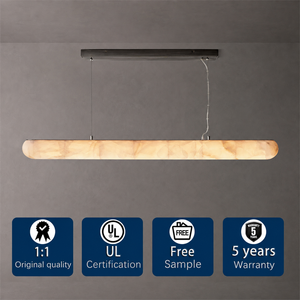
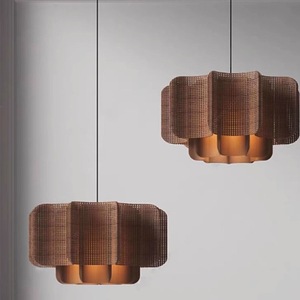
In the global architectural and commercial building sector, procuring luminaires involves far more than aesthetic selection. Modern project specifiers, mechanical & electrical (M&E) engineers, and commercial lighting importers face rigorous technical benchmarks driven by European Union directives and international safety standards. A genuine CE Certified Commercial Lighting Factory operates at the intersection of architectural aesthetics, thermal engineering, electromagnetic compatibility, and photometric precision.
CE compliance is not merely a stamped mark on an export shipping carton; it represents a comprehensive system of manufacturing discipline mandated by European directives, primarily the Low Voltage Directive (LVD) 2014/35/EU, the Electromagnetic Compatibility (EMC) Directive 2014/30/EU, and the Restriction of Hazardous Substances (RoHS) Directive 2011/65/EU (as amended by 2015/863). Non-compliant commercial luminaires introduce severe financial risks to project developers, including customs confiscation, structural fire hazards, electrical noise interference in commercial IT networks, and catastrophic early LED degradation.
Guarantees structural dielectric strength, proper insulation resistance (>100MΩ), safe creepage distances, and protection against high-voltage electrical shock across operating ambient ranges of -20°C to +50°C.
Ensures zero electromagnetic noise pollution on commercial mains circuits. Prevents harmonic distortion (THD < 10%) from disrupting building automation systems, Wi-Fi routers, and audio-visual equipment.
Mandates high optical efficacy (>120 lm/W at module level), strict standby power consumption limits (<0.5W), and complete elimination of toxic heavy metals, phthalates, and hazardous brominated flame retardants.
Commercial architectural projects—such as luxury hotel lobbies, corporate headquarters, high-density residential towers, and civic spaces—require continuous, flicker-free operational capabilities. As a leading manufacturer and exporter, our production floor combines traditional artisan metalworking (hand-rolling, soldering, and buffing brass and structural steel) with state-of-the-art solid-state physics.
The primary point of failure in commercial LED pendant lights and linear chandeliers is thermal junction buildup ($T_j$). When junction temperature exceeds 85°C, phosphor degradation accelerates exponentially, leading to color shift ($\Delta E > 5$) and rapid lumen depreciation. Our factory integrates extruded 6063-T5 aircraft-grade aluminum heat sinks and solid brass thermal pathways capable of maintaining $T_j$ safely below 65°C under continuous 24/7 operating stress.
Every commercial fixture leaving our export warehouse is powered by SELV-certified class-II constant current drivers (incorporating Mean Well, Tridonic, or Helvar components). Drivers feature multi-protocol dimming compatibility including DALI-2, 0-10V, 1-10V, PWM, and TRIAC/Phase-Cut. Crucially, our driver circuits deliver flicker-free performance ($P_{st}^{LM} < 1.0$ and $SVM < 0.4$), satisfying stringent European office lighting standards and preventing eye fatigue in corporate settings.
Architectural lighting specification demands exact light control. Utilizing optical-grade PMMA light guide plates, natural alabaster diffusers, and micro-prismatic optical lenses, our commercial pendants achieve precise beam angles while maintaining a Unified Glare Rating ($UGR$) under 19. Furthermore, our LEDs deliver full-spectrum color rendering with $CRI (R_a) > 95$ and $R_9 > 80$, ensuring rich, authentic color reproduction in high-end hospitality and retail environments.
To assist procurement managers, quantity surveyors, and lighting designers in evaluating specification compliance, the matrix below details the structural and electrical differences between consumer-grade lighting and our factory’s CE-certified commercial-grade fixtures:
| Engineering Metric | Standard Consumer Lighting | Factory CE Commercial Grade (Our Standard) |
|---|---|---|
| Electrical Directive Compliance | Self-declared CE without third-party lab testing reports | Fully tested LVD (2014/35/EU) & EMC (2014/30/EU) with official laboratory DoC |
| LED Lifespan Rating | 15,000 to 25,000 Hours (L70) | >50,000 Hours (L80B10) at 40°C ambient operating temperature |
| Color Consistency | 5 to 7-Step MacAdam Ellipse (Visible color shift) | ≤ 3-Step MacAdam Ellipse (SDCM ≤ 3) across all batch runs |
| Housing & Heat Sink | Thin stamped sheet metal or zinc alloy | Solid cold-rolled brass & extruded 6063-T5 heavy aluminum heat sinks |
| Dimming & Protocol Support | Basic TRIAC with noticeable low-end flicker | Flicker-Free DALI-2, 0-10V, Push-DIM, and Smart Matter/Zigbee 3.0 |
| Driver Surge Protection | 1.0 kV standard | ≥ 4.0 kV Surge & Over-Voltage Protection built-in |
| Photometric Documentation | Not available or estimated | Complete IES / LDT Photometric Files tested via Goniophotometer |
As the international construction industry transitions toward net-zero building standards (LEED, BREEAM, and WELL Building Standard v2), commercial lighting procurement is undergoing structural changes. Buyers and exporters must align with three primary future trends:
Commercial lighting is no longer static. Modern office environments, healthcare facilities, and luxury hospitality projects require spectrum tuning that mirrors natural sunlight. Our factory offers dual-channel CCT switchable and dynamic tunable white engines (ranging from 2700K warm incandescent glow to 6500K daylight crispness). Integrated circadian rhythm lighting has been clinically proven to enhance cognitive focus and occupant well-being in commercial spaces.
Under new European EcoDesign regulations, commercial luminaires must be designed for repairability, component disassembly, and recyclability. Our factory designs feature modular LED light engines, field-replaceable drivers, and toolless access driver boxes. This modularity reduces long-term maintenance costs for building facility managers by up to 60% while drastically extending fixture operational lifecycles.
Architectural interior design is moving away from cold industrial metals toward warm, organic textures. Commercial specifiers increasingly request natural alabaster stone, Spanish yellow travertine, solid brass with hand-applied patina finishes, and hand-blown borosilicate glass. Our factory bridges traditional handcraftsmanship—rolling, soldering, hand-buffing metalwork—with micro-engineered LED light strips, creating visual centerpieces that comply with modern commercial energy building codes.
Single-facility accountability from raw brass rolling and soldering to final optical calibration and international export logistics.
We do not operate as an intermediary trading house. Metal spinning, CNC lathe machining, hand soldering, multi-stage buffing, finish plating, assembly, and electrical testing occur under one manufacturing roof.
We modify catalog fixtures to exact project requirements: adjust drop height stem lengths, modify outer frame diameters, alter arm counts, integrate custom finish matching, and supply 110V–277V multi-voltage drivers.
Every commercial batch undergoes Hi-Pot electrical breakdown testing, insulation resistance checks, thermal aging burns, and goniophotometric analysis for IES and LDT file generation prior to container loading.
Clear answers regarding certification compliance, OEM manufacturing, export shipping, and project customization.
Yes. We provide complete, official test reports issued by accredited third-party testing laboratories along with our Declaration of Conformity (DoC). These documents contain complete LVD, EMC, and RoHS test datasets required by architects, local building authorities, and electrical engineers during project submittals.
Absolutely. Because we own our tooling, metal-rolling equipment, and finishing lines, we routinely resize luminaire diameters, extend drop rods/chains, adjust arm configurations, and engineer multi-voltage electrical configurations (100V-277V) suited for North America, Europe, the Middle East, and Asia.
Yes. We operate an in-house goniophotometric darkroom laboratory. Photometric files (.IES and .LDT) are provided for all commercial linear lights, architectural chandeliers, and high-output decorative pendants upon request.
Standard catalog stock items ship within 7–15 business days. Full-scale commercial project orders and custom engineered OEM modifications typically require 25–35 days depending on batch volume, custom brass finish hand-buffing requirements, and glass casting complexity.
All international export orders utilize heavy-duty drop-tested packaging. Glass and stone components are wrapped in high-density molded polyfoam or custom-cut EVA inserts, encased inside 7-ply corrugated outer master cartons, and reinforced with drop-tested wooden crate palletization for ocean and air freight handling.
We partner with global driver leaders including Mean Well, Tridonic, Helvar, and Lifud. Fixtures can be specified with standard ON/OFF, 0-10V dimming, TRIAC/Phase-cut dimming, DALI-2 addressable lighting networks, or wireless Matter and Zigbee smart controls.
Whether you are specifying for a hotel project, bidding on a commercial tender, or expanding your wholesale decorative lighting brand, our engineering team is ready to review your project drawings and photometric requirements.
Send an Inquiry