
Sales & Specification Support: 800-428-5367 A Division of American Lighting Brands 941 Cernan Drive, Bellwood, IL 60104  ·  Handcrafted since 1905
0%

Fine solid brass lighting can add a warm, lasting presence to a room, but appearance alone cannot confirm quality. A polished surface may look convincing in a photograph while concealing brass-plated components or lightweight construction. Ask which parts are solid brass, and check the product specifications rather than relying on a finish description. A fixture’s weight, joints, and canopy can offer useful clues, though none proves quality on its own. Small details matter.

The right choice also depends on where the light will be installed. Consider its dimensions, bulb type, brightness, and whether the finish suits nearby hardware and furnishings. Brass can age and change tone; lacquered finishes may retain a more consistent appearance, while unlacquered surfaces often develop patina. Neither option is automatically better. Think about the upkeep you will actually tolerate, not just the look you admire today.

These seven tips will help you compare materials, workmanship, finish, and practical requirements before buying. Read the warranty and care instructions, and ask the seller for clear answers about construction and replacement parts. For installation, check that the fixture meets applicable local electrical requirements and consult a qualified electrician when needed. Product pages can leave gaps. I have to admit, even careful comparisons cannot reveal every hidden detail; reliable documentation and direct questions reduce guesswork, but they do not make it disappear.
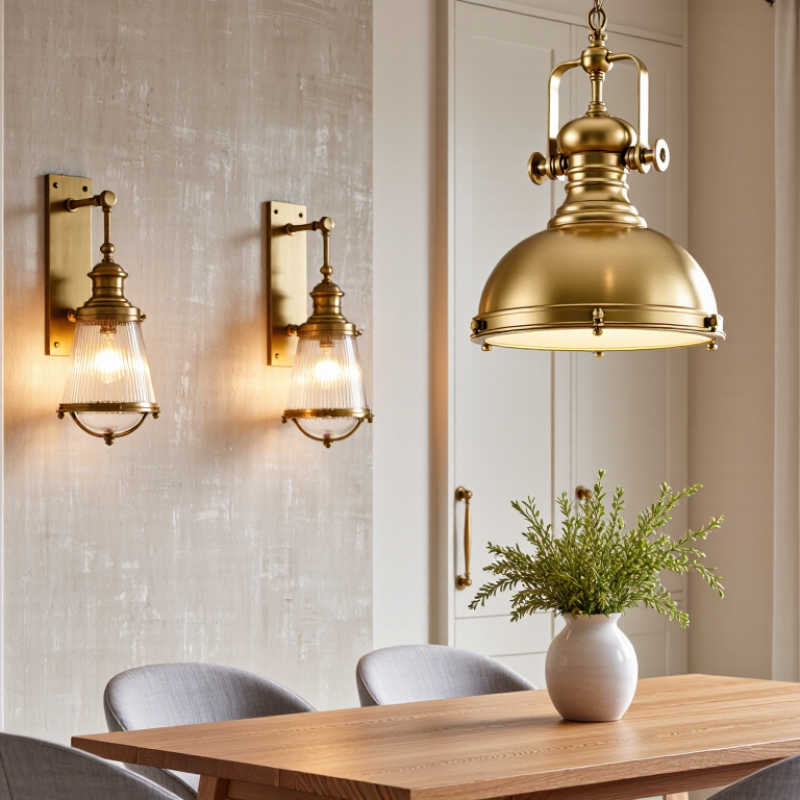
7 Tips for Buying Fine Solid Brass Lighting

Identify Solid Brass: C26000 Alloy Contains 70% Copper and 30% Zinc

Tip: Check the alloy, not just the color. The Copper Development Association’s C26000 alloy data lists nominal composition as 70% copper and 30% zinc. Its specified copper range is 68.5–71.5%, with zinc making up most of the balance. Ask the seller for the alloy grade or a material certificate. A warm gold finish alone proves nothing.

Tip: Look for construction clues. Inspect an unfinished edge beneath the canopy or inside a socket cup. Solid brass should show consistent metal through the section; a thin brass-colored layer over another metal may indicate plating. ASTM B36/B36M specifies composition requirements for brass sheet, plate, and strip, though lighting parts can use different forms. I would verify the actual component material, not assume every part matches.

Tip: Treat simple tests cautiously. Brass is generally nonmagnetic, but that does not confirm C26000; other materials can pass the same magnet check. Compare the fixture’s weight and finish across components, then request documentation if the distinction matters. Small details count. A maker’s specification is stronger evidence than a sales description, and even careful inspection has limits.

Inspect Construction: Check Solid-Brass Parts, Thickness, Joints, and Weight

Solid-brass lighting should feel substantial, but weight alone can fool you. The Copper Development Association lists C26000 brass at about 8.5 g/cm³, noticeably denser than aluminum at roughly 2.7 g/cm³. Treat that comparison as a clue, not proof: a heavy fixture may contain steel parts, thick glass, or a solid mounting plate. Ask which components are brass, and check the maker’s material specification before buying.

Tip: Inspect the canopy, socket cup, and arm ends. Look for continuous metal edges, cleanly finished openings, and joints without gaps or excess solder. A small magnet can help identify some steel parts, but it cannot confirm brass.

Check exposed edges and threaded areas for visible thickness. Thin stamped shells may flex near screw holes, while solid components usually hold their shape under gentle pressure.

Examine soldered or brazed joints for even seams and stable alignment. Uneven color can also signal plating, though patina and lighting affect appearance.

If possible, compare the fixture’s stated weight with its dimensions; an implausibly light body deserves questions. A caliper can help assess accessible edges, but do not force tools into finished surfaces. Ask for component details in writing. That step is easy to skip.

Match UL 1598 Listings and Damp/Wet Ratings to the Installation Site

A brass fixture can look substantial and still be unsuitable for its location. Check the product label and installation instructions for the exact model, not just the collection name. A UL 1598 listing indicates evaluation to a luminaire safety standard; it does not, by itself, tell you whether the fixture is rated for rain. Look for a separate damp-location or wet-location marking.

Damp-rated fixtures suit areas with moisture but little direct water, such as a covered porch or a bathroom away from the shower. Wet-rated fixtures are intended for places exposed to rain or water spray. Check the actual exposure: a deep roof overhang may still leave a wall light vulnerable to wind-driven rain.

Small detail. Confirm that the rating matches the mounting position and orientation in the instructions. Solid brass resists corrosion better than many common metals, but it does not make electrical parts waterproof.

I would also check seams, sockets, and finish-care guidance; these details are easy to overlook when choosing by appearance. If the label is unclear, ask the seller or a qualified electrician to verify the documentation before installation.

Compare LED Output in Lumens, Color Temperature in Kelvin, and CRI

A solid-brass fixture can look warm in a showroom and surprisingly flat at home. Compare light output by lumens, not watts: watts measure energy use, while lumens indicate visible light. The U.S. Department of Energy’s “Lighting Choices to Save You Money” guide uses about 800 lumens as a familiar replacement for a traditional 60-watt bulb. For a reading sconce, check the fixture’s stated output and beam direction too; a bright bulb aimed at a wall may not illuminate a page well.

Color temperature, measured in Kelvin, shapes how brass and nearby finishes appear. Around 2700K gives a soft, amber glow; 3000K generally looks a little cleaner. Neither number measures brightness. Small details matter. A cool 4000K source may make a brass surface feel less inviting, while a warm source can make white walls look creamier. Consider the room’s existing lamps before choosing.

Check CRI, or Color Rendering Index, for how faithfully a light reveals colors. A rating of 90 or higher can help show wood grain, fabric, and brass tones more naturally than a lower rating, though CRI is not a complete picture. The Illuminating Engineering Society’s TM-30-20 report provides additional color-fidelity and gamut measures. If those figures are available, compare them too. One easy mistake is judging a finish under showroom lighting alone; compare samples at home, where the fixture will actually be used.

7 Tips for Buying Fine Solid Brass Lighting: Compare LED Output, Color Temperature & CRI

Compare representative LED light-output options. The labels also show example color temperatures and color-rendering ratings to consider when choosing a bulb for a brass fixture.

About 450, 800, and 1,100 lumens are common approximate output benchmarks associated with 40 W, 60 W, and 75 W incandescent replacements. Color temperature and CRI examples are illustrative, not tied to a particular product; check the bulb’s specifications and fixture compatibility before buying. Higher CRI can help reveal colors more accurately.

Evaluate Finish Durability, Warranty, Replacement Parts, and Lifetime Cost

A solid-brass fixture can age beautifully, but its finish is not automatically durable. Ask whether the surface is unlacquered, lacquered, or sealed, and request care instructions in writing. Unlacquered brass develops a patina; that change may be appealing, or disappointing. Small details matter. Check whether the warranty covers finish failure, corrosion, sockets, and labor, and note exclusions such as cleaning damage. A sample under showroom lights may look different beside a window or in a humid bathroom.

Ask how long replacement parts will remain available. Confirm that sockets, shades, mounting hardware, and LED drivers can be ordered separately, and record their part numbers. For lifetime cost, compare purchase price, expected energy use, replacement lamps, and service costs over the years you expect to keep the fixture.

The U.S. Department of Energy’s Energy Saver guidance reports that LEDs use at least 75% less energy and last up to 25 times longer than incandescent lighting. That comparison concerns light sources, not the brass body or every integrated LED assembly.

Keep the paperwork. A low purchase price can still mean higher upkeep, while an expensive fixture may not repay its cost if key parts cannot be replaced.

FAQS

Should I compare bulbs by watts or lumens?

Compare lumens for visible light. Watts measure energy use. About 800 lumens is a familiar replacement for a traditional 60-watt bulb.

Why does beam direction matter for a reading sconce?

A bright bulb aimed at a wall may leave your book dim. Check the fixture’s output and where its beam falls.

What color temperature works well with brass?

Around 2700K gives a soft, amber glow. At 3000K, light usually looks a little cleaner. Check nearby lamps, too.

Does Kelvin measure brightness?

No. Kelvin describes light color, not brightness. A 4000K source may make brass feel less inviting.

What does CRI tell me?

CRI indicates how faithfully light reveals colors. A rating of 90 or higher can help show wood grain, fabric, and brass tones naturally.

Is CRI the only color measure worth checking?

No. CRI has limits. If available, compare additional color-fidelity and gamut measures, such as those in TM-30-20.

How can I check whether a brass finish will age well?

Ask whether it is unlacquered, lacquered, or sealed. Request care instructions in writing. Unlacquered brass develops a patina, which may not suit everyone.

What should a fixture warranty and parts check include?

Check coverage for finish failure, corrosion, sockets, and labor. Confirm that shades, mounting hardware, and LED drivers can be ordered separately. Keep part numbers.

How can I estimate lifetime lighting costs?

Compare purchase price, energy use, replacement lamps, and service costs. LEDs use at least 75% less energy and can last up to 25 times longer than incandescent sources. That does not guarantee the fixture body or an integrated LED assembly will last as long. I might still overlook that distinction.

Conclusion

Fine solid brass lighting combines lasting materials with thoughtful construction, but appearance alone cannot confirm quality. Check the alloy specification: C26000 brass contains 70% copper and 30% zinc. Inspect which components are actually solid brass, along with their thickness, joints, and overall weight, to assess durability and craftsmanship.

Before choosing a fixture, make sure its UL 1598 listing and damp- or wet-location rating suit the intended installation. Compare LED performance by looking at light output in lumens, color temperature in Kelvin, and color rendering index (CRI), rather than relying on wattage alone. Finally, consider how well the finish resists wear, the warranty terms, and whether replacement parts are available. These details, along with energy use and expected maintenance, help reveal the fixture’s lifetime cost and make it easier to choose lighting that fits both your space and long-term needs.

Clara

Clara

Clara is a dedicated marketing professional with a deep understanding of the company’s products, customers, and industry landscape. With a strong background in market research, content strategy, and digital communication, she transforms complex product information into clear, practical, and......