Sales & Specification Support: 800-428-5367 A Division of American Lighting Brands 941 Cernan Drive, Bellwood, IL 60104  ·  Handcrafted since 1905
0%

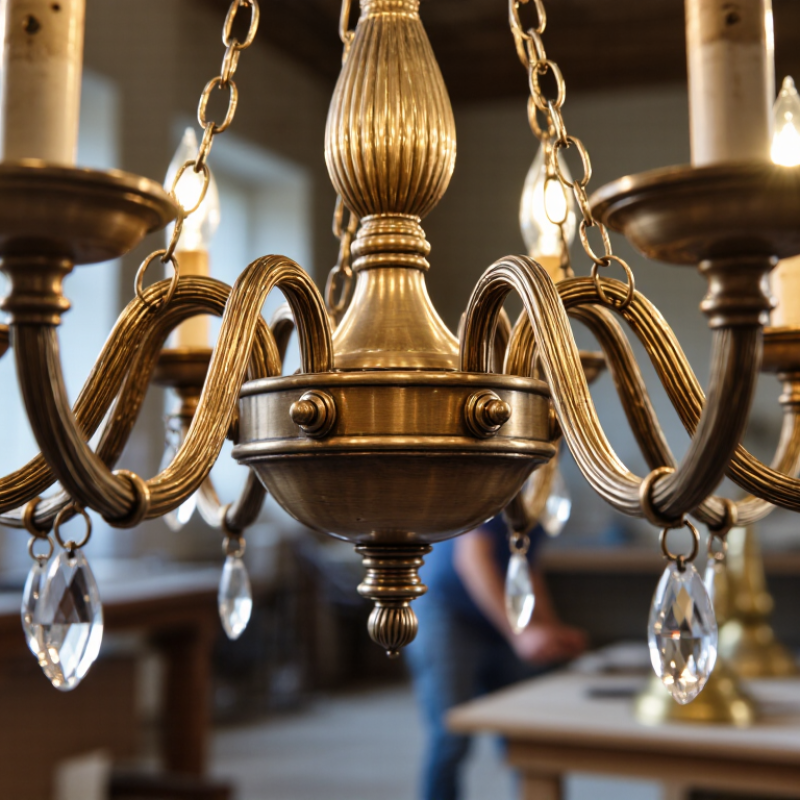
Choosing China’s best Handcrafted brass chandeliers manufacturer requires more than comparing polished photographs. A reliable decision begins with visible craftsmanship, material transparency, and consistent production evidence. Brass thickness, weld quality, surface finishing, socket performance, and canopy strength all affect the final installation. A chandelier may look impressive in a showroom yet reveal uneven patina or weak joints under close inspection.

William Morris, a respected designer and authority on craftsmanship, wrote, “Have nothing in your house that you do not know to be useful, or believe to be beautiful.” His principle remains relevant to luxury lighting. The right manufacturer should unite beauty with practical engineering. Ask for workshop images, material specifications, electrical testing records, and samples of aged or brushed finishes. Request details about custom dimensions, crystal selection, wiring standards, packaging, and replacement components. These details matter.

Small details matter.

Experienced manufacturers usually explain their process clearly. They can discuss wax modeling, hand-polishing, casting tolerances, and inspection procedures without vague promises. They should also provide realistic lead times and communicate limitations before accepting an order. No supplier is perfect. Even skilled artisans may produce slight variations in tone, texture, or alignment. In fact, those differences can confirm genuine hand finishing, although excessive inconsistency suggests weak quality control.

This guide examines how to evaluate Chinese manufacturers of Handcrafted brass chandeliers through design capability, production experience, reliability, customization support, and after-sales service. The goal is not to promote the loudest claim, but to identify a partner whose workmanship remains convincing when the lights are switched off.

China Best Handcrafted Brass Chandeliers Manufacturer?

What Defines a Handcrafted Brass Chandelier Manufacturer?

Choosing a handcrafted brass chandelier manufacturer requires more than attractive photographs. In China’s lighting sector, credible workshops show how their products are made. They explain where brass is sourced, how frames are formed, and how finishes are applied. Skilled makers can discuss alloy choices, soldering, polishing, patina, and electrical assembly in practical terms. They should also provide drawings, samples, and clear production timelines. Vague answers are a warning sign.

Experience appears in small details. A strong manufacturer checks arm alignment, socket placement, ceiling plates, and suspension weight before shipment. Each chandelier should receive electrical and structural inspections, with records available to the buyer. Suitable wiring, grounding, and documentation must match the destination market. This is not glamorous work. It prevents expensive surprises during installation.

Reliability also depends on communication after the order. A dependable team confirms revisions, reports delays early, protects delicate surfaces, and supplies replacement components when needed. Look for consistent quality across a sample and a larger batch, not only one perfect showroom piece. Handcrafted metal will show slight variations. That can create character, but uneven welds or unstable finishes are not acceptable. Honest manufacturers should admit what they cannot do. That admission builds more trust than polished promises, although it may make the sales conversation less comfortable.

How Handcrafted Brass Chandeliers Are Made in China

A handcrafted brass chandelier in China begins with a measured drawing and a practical material plan. Skilled makers select brass sheets, tubes, rods, and cast components according to the fixture’s size. They check thickness, weight, and surface quality before cutting. Small errors can affect balance later.

Craft workers shape the metal through bending, spinning, drilling, and controlled heating. Decorative leaves, rings, and arms may be formed separately. Artisans then join these parts by brazing or welding. Each joint is filed, chased, and checked by hand. This stage requires patience. A polished surface can reveal careless marks.

After assembly, the chandelier receives brushing, polishing, or an aged patina. Workers clean the surface carefully before applying the finish. Electrical parts are installed according to the project specification. Inspectors examine alignment, socket placement, hanging strength, and visible seams. Practical workshops also conduct basic lighting and stability checks before packing. Handmade production is not perfectly uniform. Slight differences in texture often show genuine handwork, yet uneven gaps or weak joints are unacceptable. In my experience, the strongest manufacturers document each inspection and keep sample records. They also welcome corrections when a trial piece exposes a design problem. That habit matters more than impressive photographs.

Key Standards for Evaluating Manufacturer Quality

China’s Best Handcrafted Brass Chandelier Manufacturer?

Evaluating a manufacturer requires more than admiring a polished showroom sample. Request brass composition records, wiring diagrams, load tests, and coating inspection results. Reliable suppliers can trace metal batches, soldering work, and final assembly to trained operators. Ask for clear evidence.

Electrical safety deserves priority. The U.S. Department of Energy reports that LED lamps use at least 75% less energy than incandescent lighting and last up to 25 times longer. A capable manufacturer should provide compatible LED specifications, thermal testing, grounding details, and documented quality checks. Decorative excellence cannot replace safe engineering. It should not.

Finish durability also reveals manufacturing discipline. Ask whether surfaces receive controlled cleaning, plating, or protective coating. Request adhesion and corrosion test records, such as methods aligned with ASTM standards. Inspect hidden areas, including canopy joints, threaded fittings, and cable exits. These details often expose rushed production. The International Energy Agency reports that buildings consume about 30% of global final energy, making efficient lighting choices commercially important. That figure supports reviewing wattage, heat management, and replacement access before approval.

Experience matters during sampling. Hang the chandelier temporarily and check balance, movement, chain strength, and light distribution. A manufacturer may pass paperwork yet miss visual alignment. I would also compare several production samples, not one perfect piece. Small differences in brass tone are normal, but uncontrolled variation is a warning. Reliable factories welcome corrections and record them.

China Best Handcrafted Brass Chandeliers Manufacturer? Key Standards for Evaluating Manufacturer Quality

A practical material-quality check is to verify the brass alloy designation and its certified chemical composition. The chart shows the midpoint of the specified copper-content range for three commonly used brass alloys. Copper content alone does not prove craftsmanship, so buyers should also request mill certificates, finish samples, electrical safety documentation, and quality-control records.

Reference ranges: C26000 cartridge brass 68.5–71.5% Cu; C36000 free-machining brass 60.5–63.5% Cu; C46400 naval brass 59.0–62.0% Cu. Composition ranges are commonly specified in ASTM copper-alloy standards, including ASTM B16 and ASTM B36.

Customization, Design, and Project Support Options

China Best Handcrafted Brass Chandeliers Manufacturer?

Customization, Design, and Project Support Options

A reliable handcrafted brass chandelier manufacturer should offer more than attractive photographs. Custom dimensions, brass finishes, shade materials, and mounting systems help each fixture suit the room. The design team should review ceiling height, electrical points, weight limits, and cleaning access before production. Small details matter.

The International Energy Agency reports that buildings consume about 30% of global final energy. Therefore, project support should include efficient LED compatibility, heat management, and practical maintenance planning. A professional manufacturer can provide shop drawings, material samples, photometric files, installation guides, and replacement components. For hospitality or residential projects, these documents reduce site confusion. Still, a perfect drawing may not solve every problem. On-site conditions can change.

Tips: Request a full-scale drawing before approval. Confirm canopy dimensions and suspension length. Ask for brass sample photos under warm and cool lighting. Check the driver specification, dimming method, and replacement process. The U.S. Department of Energy states that LED lighting uses at least 75% less energy and lasts up to 25 times longer than incandescent lighting. That makes efficient lighting a sensible project consideration. However, decorative quality should not be judged from energy data alone. Touch, finish consistency, and balanced proportions still require human inspection.

China Best Handcrafted Brass Chandeliers Manufacturer? - Customization, Design, and Project Support Options

Evaluation Dimension Typical Option or Specification Project Value Recommended Verification
Core Material Solid brass, brass sheet, brass tube, or mixed brass construction Supports durability, repairability, and a distinctive warm metallic appearance Request material descriptions, component drawings, and a sample or finish panel
Handcrafted Processes Cutting, forming, brazing or welding, hand finishing, polishing, brushing, and controlled patination Allows decorative details and finish variations that are difficult to achieve with fully standardized production Confirm process limits, acceptable variation, and inspection standards before approval
Customization Scope Overall dimensions, number of light arms, canopy size, suspension length, metal finish, crystal or glass elements Enables coordination with interior layouts, ceiling heights, furniture plans, and lighting concepts Provide a dimensioned brief, reference images, ceiling details, and target quantity
Design Development Concept review, 2D shop drawings, 3D modeling, finish boards, and revision control Reduces dimensional conflicts and clarifies appearance before manufacturing Require drawing approval records and a clearly identified revision number
Prototype or Sample Finish sample, scaled mock-up, single prototype, or first-article inspection unit Provides an opportunity to validate scale, color, assembly, and light distribution Approve the sample in writing before batch production
Lighting Configuration Common lamp-holder formats may include E14, E26, E27, or other region-specific bases Supports compatibility with locally available lamps and project lighting specifications Confirm lamp-holder type, voltage, frequency, wattage limits, dimming method, and local code requirements
Electrical Documentation Wiring diagram, installation instructions, component list, and applicable test documentation Assists electricians, inspectors, installers, and project managers during approval and installation Check documentation against the destination country and project authority requirements
Typical Custom Lead Time Approximately 6–16 weeks after drawing, finish, and payment approval; complex projects may require longer Helps establish realistic procurement and installation milestones Obtain a written schedule covering sampling, production, inspection, packing, and shipping
Quality Control Dimensional checks, finish inspection, assembly checks, electrical testing, and pre-shipment photographs Improves consistency and identifies defects before dispatch Define tolerances, inspection points, acceptable finish variation, and reporting format
Packaging and Protection Protective wrapping, separated components, foam or molded cushioning, reinforced cartons, and export crates when required Reduces the risk of scratches, deformation, and breakage during handling and transit Request packing photos, package dimensions, gross weight, and replacement-part arrangements
Project Support Drawing coordination, quantity scheduling, installation guidance, spare-part planning, and shipment coordination Simplifies communication between design, procurement, site, and installation teams Assign a single project contact and maintain a shared approval and delivery schedule
Commercial Planning Pricing typically depends on size, brass weight, finish, light count, decorative elements, packaging, and order quantity Creates a more accurate comparison between customized quotations Compare itemized quotations rather than unit price alone, including tooling, sampling, freight, and taxes
Best Fit for Use Hotels, restaurants, residences, retail interiors, public areas, and other decorative lighting projects Offers design flexibility for both single-feature installations and coordinated multi-unit schemes Confirm ceiling structure, access for installation, maintenance requirements, and local regulations

Note: Lead times and specifications are indicative planning ranges. Final requirements should be confirmed through approved drawings, samples, electrical documentation, and a project-specific quotation.

How to Choose the Best Chinese Manufacturer for Your Needs

China Best Handcrafted Brass Chandeliers Manufacturer?

How to Choose the Best Chinese Manufacturer for Your Needs

Choosing a Chinese manufacturer requires more than comparing catalog prices. Ask for brass specifications, production photos, and a recent sample. Solid brass, controlled welding, and even hand-polishing strongly affect durability. Examine the canopy, wiring, sockets, and mounting plate carefully. Small defects often appear around joints and hidden screws.

Request factory audit records, quality-control procedures, and references from comparable hospitality or residential projects. Confirm whether the manufacturer can provide electrical test reports for your destination market. Discuss drawings, dimensions, light temperature, packaging, replacement parts, and delivery terms before placing an order. A reliable supplier explains limitations clearly instead of promising everything. That matters.

Tips: Ask for a live video inspection. Check one finished sample. Test the packaging. Confirm lead times in writing. Use a pre-shipment inspection when the order is valuable.

Do not judge craftsmanship from polished photographs alone. Visit the workshop if possible, or hire an independent inspector. Look for organized storage, labeled components, protective wrapping, and consistent finishing across several fixtures. Compare the approved sample with the production unit, because color and texture may change between batches. Even experienced buyers sometimes overlook installation access or ceiling weight limits. That mistake can become expensive. Keep communication documented, and allow time for revisions.

FAQS

What defines a credible handcrafted brass chandelier manufacturer?

A credible manufacturer explains its brass sources, forming methods, finishes, and electrical assembly. Vague answers deserve caution. They should also provide drawings, samples, and realistic timelines.

How are handcrafted brass chandeliers made?

Makers select brass sheets, tubes, rods, and cast parts for the fixture’s size. They cut, bend, drill, heat, braze, or weld each component. Workers then file joints and inspect visible seams by hand.

Are slight differences acceptable in handmade chandeliers?

Small texture or color variations can show genuine handwork. Uneven gaps, weak joints, and poor alignment are not acceptable. Handmade does not mean careless.

What inspections should happen before shipment?

Inspectors should check arm alignment, socket placement, hanging strength, ceiling plates, and visible seams. Basic lighting and stability tests are also useful. Inspection records matter.

What customization options should a manufacturer offer?

Common options include dimensions, brass finishes, shade materials, suspension lengths, and mounting systems. The design team should review ceiling height, electrical points, weight limits, and cleaning access. Small details matter.

Which project documents should buyers request?

Request shop drawings, material samples, installation guides, lighting data, and replacement-part information. Ask for a full-scale drawing before approval. Drawings can still miss changing site conditions.

How can buyers check electrical compatibility?

Confirm wiring, grounding, driver details, dimming methods, and local documentation requirements. Check socket placement and canopy dimensions carefully. Do not rely only on photographs.

Why should efficient lighting be considered?

Compatible LED lighting can reduce energy use and support longer service life. Heat management and maintenance planning remain important. Energy data alone cannot judge decorative quality.

What shows reliable communication after ordering?

A dependable team confirms revisions, reports delays early, protects delicate surfaces, and supplies replacement components. They should accept corrections from a trial piece. Perfect promises are not necessary. Honest limits are better.

Conclusion

Choosing the best Chinese manufacturer for handcrafted brass chandeliers requires more than comparing prices. A qualified manufacturer combines skilled artisanship with dependable engineering, using carefully selected brass, precise casting, polishing, welding, and finishing techniques to create durable and visually consistent fixtures. Clear quality-control procedures, stable production capacity, professional certifications, and thorough product inspections are important standards when evaluating a supplier.

A reliable manufacturer should also provide flexible customization, including dimensions, finishes, lighting configurations, decorative details, and project-specific mounting solutions. Strong design support, accurate technical drawings, responsive communication, secure packaging, and dependable delivery planning can make a significant difference for residential, hospitality, and commercial projects. Buyers should review samples, production capabilities, quality documentation, lead times, after-sales support, and previous project experience before making a decision. The best choice is a manufacturer that balances craftsmanship, design flexibility, technical expertise, consistent quality, and professional project support.

Clara

Clara

Clara is a dedicated marketing professional with a deep understanding of the company’s products, customers, and industry landscape. With a strong background in market research, content strategy, and digital communication, she transforms complex product information into clear, practical, and......