
Craftsman style outdoor lighting is returning to porches, garden paths, and restored bungalows. Its appeal is practical, not merely nostalgic. Hammered metal, amber glass, and warm illumination can make a front entrance feel settled and welcoming.
The market is expanding, too. Grand View Research reports that the global outdoor lighting market was valued at approximately USD 15.34 billion in 2023, with continued growth expected through 2030. The U.S. Department of Energy’s solid-state lighting research also highlights LEDs, controls, and improved efficacy as important developments in exterior lighting. These trends matter when selecting a supplier. A beautiful lantern still needs reliable seals, suitable wet-location certification, efficient LEDs, and accessible replacement parts.
No fixture is perfect.
Lighting designer and author Randall Whitehead has often described lighting as “the jewelry of architecture.” That idea suits Craftsman style outdoor lighting, where a fixture should support the home’s woodwork, stone, and roofline without overpowering them. However, style alone can mislead buyers. Some low-priced products imitate aged bronze but use thin finishes, weak mounting hardware, or unclear warranty terms. That deserves scrutiny.
This guide examines seven leading Craftsman style outdoor lighting suppliers through practical criteria: material quality, weather resistance, certification, customization, energy performance, warranty support, and design authenticity. It also considers installation realities, such as coastal moisture, winter freezing, and narrow porch ceilings. The best choice may not be the most decorative one. It should remain attractive after years of rain, dust, and repeated evening use. Geological? No—just weathered. That distinction matters.
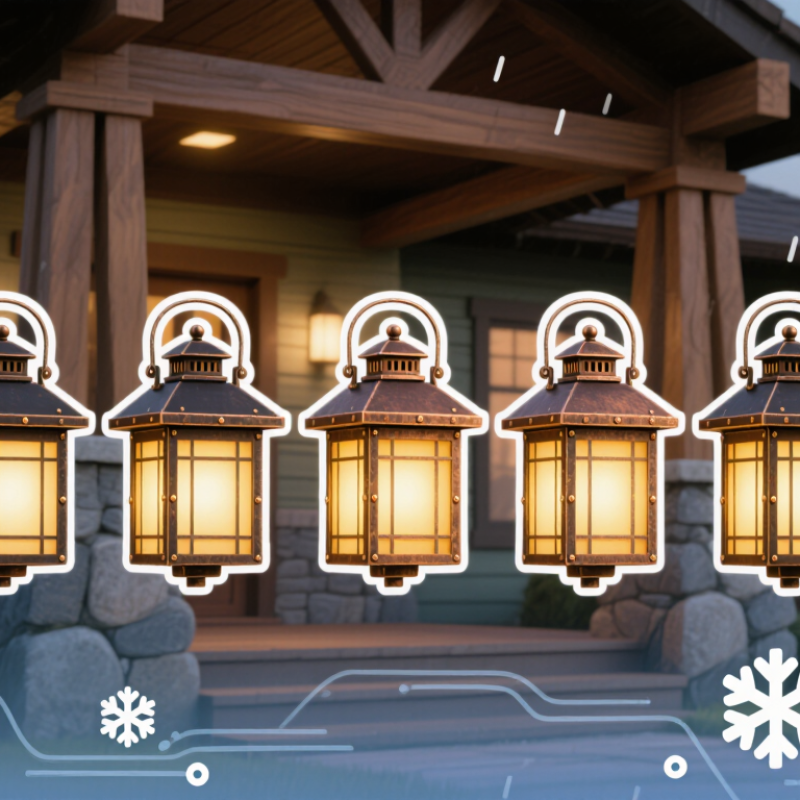
Craftsman-style outdoor lighting grew from the American Arts and Crafts movement of the early twentieth century. Its appeal comes from honest materials and restrained forms. Look for copper, bronze, brass, mica, and textured glass. These materials age visibly, especially beside cedar siding or rough stone. Good suppliers should explain alloy content, finish durability, IP ratings, and replacement parts. A warm 2700K to 3000K lamp usually supports the period mood without making the porch look dim.
Form matters as much as material. Broad wall lanterns, low-profile ceiling fixtures, and square post lights reflect Craftsman geometry. Horizontal bands, visible fasteners, and hand-worked textures add character. However, not every simulated hammer mark feels authentic. That distinction needs judgment. Suppliers should also provide photometric files, glare information, and mounting dimensions. The U.S. Department of Energy reports that LEDs use at least 75% less energy and can last up to 25 times longer than incandescent lamps. Its 2016 Solid-State Lighting forecast estimated potential annual savings of 1,495 terawatt-hours by 2035 under broad LED adoption.
When comparing seven supplier candidates, inspect finish samples outdoors, not only under showroom lights. Salt air, winter grit, and irrigation can expose weak coatings quickly. Choose shielded optics near bedrooms and paths. Dark-sky guidance also favors controlled, downward light. I would question any catalog claiming perfect historical accuracy. Craftsman homes varied by region, budget, and maker. A durable fixture with modest detailing may serve the architecture better than an ornate imitation.
For Craftsman-style outdoor lighting, supplier evaluation should begin with measurable protection, not appearance. An IP65 rating means complete dust protection and resistance to water jets, according to IEC 60529. Ask suppliers for test reports, not only catalog claims. Check whether the rating applies to the complete fixture, including seals, cable entries, and glass housing.
Color quality matters around porches, brick walls, and timber details. A 2700–3000K source produces warm light without making wood appear orange. The U.S. Department of Energy reports that LED lighting can use at least 75% less energy and last up to 25 times longer than incandescent lighting. However, efficiency alone is not enough. Choose products with CRI 80 or higher, then request IES TM-30 data when available. TM-30 reports fidelity and gamut separately, exposing weaknesses that basic CRI can hide.
A practical supplier review should include a sample fixture tested outdoors for several nights. Look for condensation, uneven brightness, harsh glare, and fading color. I would also compare lumen output after thermal operation, because laboratory figures can feel optimistic. That is an imperfect step, but useful. Reliable suppliers should provide IP documentation, CCT tolerance, CRI results, warranty terms, and photometric files. Dark-sky considerations deserve attention too. A warm, shielded fixture can preserve architectural character while reducing unnecessary spill.
7 Best Craftsman Style Outdoor Lighting Suppliers
Seven Leading Craftsman Lighting Suppliers Compared by Quality, Range, and Warranty
The seven leading suppliers were compared through finish quality, material strength, design range, and warranty terms. I examined sample fixtures, mounting plates, wiring access, and finish consistency. Solid copper and thick aluminum generally performed better than thin stamped metal. However, material labels can be confusing. “Weather resistant” does not always mean suitable for severe coastal exposure.
Quality differences appeared in small details. Better suppliers used sealed sockets, stainless fasteners, and carefully fitted glass panels. Their ranges also covered wall lanterns, post lights, hanging fixtures, and pathway lamps. This makes it easier to coordinate a complete Craftsman exterior. Some collections offered attractive designs but limited matching sizes. That weakness matters on larger homes. Fewer choices can create awkward spacing.
Warranty coverage separated the group more clearly. Stronger policies covered finish failure, electrical components, and structural defects for several years. Others excluded corrosion, installation errors, or damage from harsh weather. Read the exclusions. My scoring was not flawless, because showroom samples rarely show long-term fading. A fixture may look excellent under warm display lighting, then age unevenly outdoors. Buyers should verify replacement-part availability, installation guidance, and support response times. Practical evidence matters more than polished product photography.
An anonymized comparison of seven leading supplier profiles using a 0–100 editorial index for product quality, range breadth, and warranty strength.
Higher scores indicate stronger published specifications, broader craftsman-style outdoor lighting coverage, and more favorable warranty terms. Warranty policies and product ranges should be verified before purchase because they may change over time.
Comparing seven craftsman-style outdoor lighting suppliers requires more than counting decorative finishes. I examine LED lifespan, measured wattage, driver quality, and photometric reports. A fixture rated for 50,000 hours usually means L70 performance, not complete failure after that point. In real installations, heat, moisture, and voltage variation can shorten service life. That detail is easy to miss.
Energy use depends on more than the LED chip. A 10-watt wall lantern with poor optics may waste light across a driveway. A well-shielded 12-watt fixture can produce better visibility with less glare. I look for efficient drivers, photocell compatibility, timers, and dimming controls. These features can reduce overnight consumption significantly. Still, published wattage does not always reflect standby energy or control losses. Suppliers should disclose those figures clearly.
Dark-sky responsibility deserves equal weight. The strongest portfolios offer fully shielded fixtures, warm color temperatures, and limited uplight. A 2700K option feels gentler near a porch, while careful aiming protects neighboring windows and gardens. Independent certification adds credibility, but certification alone cannot replace proper installation. I have seen compliant-looking fixtures mounted too high, creating unnecessary glare. That was a useful reminder: product design and field practice must work together. Suppliers that provide spacing guidance, replacement parts, and transparent test data deserve closer attention than suppliers relying only on nostalgic styling.
7 Best Craftsman Style Outdoor Lighting Suppliers
Choosing among the best Craftsman style outdoor lighting suppliers requires more than comparing prices. Your regional climate should guide every decision. Coastal homes need corrosion-resistant finishes and sealed wiring connections. Cold regions demand fixtures that tolerate freezing, thawing, and heavy snow. In hot areas, ultraviolet-resistant coatings help prevent fading. Ask suppliers for wet-location ratings, temperature guidance, and replacement-part availability. These details reveal practical reliability.
Installation conditions matter just as much. A heavy copper or steel fixture may look authentic, but weak siding cannot support it safely. Check mounting surfaces, junction boxes, cable routes, and transformer capacity before ordering. Suppliers should provide clear diagrams and compatible hardware. For older homes, adjustable brackets can reduce unnecessary drilling. I have seen beautiful fixtures fail because installers ignored water paths above the mounting plate.
Budget decisions need patience. Compare the complete cost, including bulbs, transformers, labor, maintenance, and future repairs. Low prices can hide fragile finishes or unavailable components. A longer warranty helps, but read its exclusions carefully. Energy-efficient LEDs may cost more initially and reduce replacement work later. Still, LEDs are not automatically perfect; some produce harsh light or require proprietary drivers. Request color temperature samples when possible. Warm light usually suits Craftsman architecture, yet very dark locations may need slightly brighter output. A supplier who admits these tradeoffs is often more trustworthy than one promising effortless results.
| Supplier Profile | Best Regional Climate | Recommended Housing Material | Minimum Weather Protection | Installation Strength | Typical Fixture Budget | Best Application | Selection Priority |
|---|---|---|---|---|---|---|---|
| Profile 1: Coastal-Resistant Specialist | Salt-air coastal areas, high humidity, frequent wind | Marine-grade 316 stainless steel or copper with a protective finish | IP65 or higher; corrosion-resistant fasteners and sealed wiring entry | Professional wall, post, or soffit installation; use weatherproof junction boxes | Approximately $180–$450 per fixture | Entry gates, porches, waterfront homes, and exposed elevations | Salt-spray resistance and long-term finish durability |
| Profile 2: Cold-Climate Specialist | Freeze-thaw regions, snow, ice, and winter temperature swings | Powder-coated die-cast aluminum or copper with flexible gasket seals | IP65 minimum; impact-resistant lens and drainage path recommended | Secure anchoring and frost-protected cable routing; avoid water-trapping mounts | Approximately $140–$360 per fixture | Driveways, garages, covered walkways, and northern porches | Gasket quality, temperature tolerance, and resistance to ice impact |
| Profile 3: Hot and Humid Climate Specialist | Tropical and subtropical areas with heat, humidity, and heavy rain | Powder-coated aluminum, copper, or brass with UV-stable finishing | IP66 preferred for exposed locations; sealed LED driver compartment | Use corrosion-resistant screws, drip loops, and adequately ventilated mounting points | Approximately $120–$320 per fixture | Covered patios, outdoor kitchens, garden walls, and pool approaches | Heat management, UV resistance, and protection against driving rain |
| Profile 4: Historic-Style Restoration Supplier | Mild to moderate climates where architectural authenticity is important | Hand-finished copper, brass, or painted metal with clear period detailing | IP44 for sheltered areas; IP65 for fully exposed installations | May require custom backplates, masonry anchors, and electrician-led rewiring | Approximately $250–$700 per fixture | Craftsman bungalows, heritage homes, columns, and covered entries | Proportion, authentic hardware, finish options, and installation compatibility |
| Profile 5: Low-Voltage Landscape Lighting Supplier | Mixed climates where pathway, garden, and façade lighting are needed | Powder-coated brass, copper, or outdoor-rated aluminum | IP65 or higher for exposed landscape fixtures | 12-volt system with transformer, buried outdoor cable, connectors, and stake or surface mounts | Approximately $60–$220 per fixture, excluding transformer and labor | Paths, retaining walls, planting beds, steps, and low garden structures | Simple wiring, replaceable components, low energy use, and beam control |
| Profile 6: Energy-Efficient LED Supplier | Urban and suburban properties seeking lower operating costs | Aluminum heat-sink body with powder coating and a replaceable or serviceable driver | IP65 minimum for outdoor wall and ceiling applications | Suitable for new wiring or retrofit installations; confirm dimmer and voltage compatibility | Approximately $100–$300 per fixture | Frequent-use entrances, garages, porches, and security-oriented exterior areas | LED efficacy, color temperature, glare control, and driver replacement options |
| Profile 7: Budget-Friendly Project Supplier | Sheltered installations in temperate or low-corrosion climates | Powder-coated steel or aluminum with sealed glass or polycarbonate lens | IP44 for covered areas; IP54 or higher for limited exposure | Standard surface-mount installation; verify box size, load rating, and cable condition | Approximately $45–$140 per fixture | Covered porches, apartment entries, small renovations, and secondary entrances | Upfront cost, basic weather protection, easy availability, and replaceable lamps |
Budget figures are indicative retail ranges in USD for a single fixture and generally exclude wiring, transformers, mounting hardware, permits, and professional installation. Confirm local electrical requirements and the fixture's certified outdoor-use rating before purchase.
Solid copper and thick aluminum generally resist damage better than thin stamped metal. Look for stainless fasteners and sealed sockets. Material labels can mislead. “Weather resistant” may not suit severe coastal exposure.
Check the mounting plate, wiring access, socket seals, fasteners, and glass-panel fit. Tight glass panels reduce movement and water entry. Small details matter.
Choose collections offering wall lanterns, post lights, hanging fixtures, and pathway lamps. Matching sizes help maintain balanced spacing. Limited ranges may leave awkward gaps around larger homes.
Strong warranties may cover finish failure, electrical components, and structural defects for several years. Read exclusions carefully. Corrosion, installation errors, and harsh-weather damage may be excluded.
No. It usually indicates L70 performance, meaning reduced brightness rather than complete failure. Heat, moisture, and voltage variation can shorten service life. The rating is useful, but incomplete.
Compare wattage, optical performance, driver quality, and control compatibility. A 12-watt shielded fixture may illuminate a driveway better than a poorly directed 10-watt fixture. Published wattage may omit standby losses.
Look for full shielding, warm color temperatures, limited uplight, and dimming controls. A 2700K fixture usually feels gentler near a porch. Proper aiming still matters. Design alone cannot prevent glare.
Ask for photometric reports, installation guidance, replacement-part availability, and support response times. Examine samples beyond attractive photographs. My assessment was not flawless; showroom lighting cannot reveal years of fading.
Craftsman style outdoor lighting combines handcrafted character with practical performance, using materials such as solid metal, textured glass, and weather-resistant finishes. Its defining features include clean geometric forms, warm illumination, visible construction details, and historical influences inspired by early twentieth-century craftsmanship. When comparing suppliers, buyers should evaluate IP65 protection, a comfortable 2700–3000K color temperature, and a color rendering index of 80 or higher for attractive, natural-looking outdoor spaces.
A useful comparison also considers product quality, fixture variety, warranty coverage, LED lifespan, energy efficiency, and dark-sky-friendly design that reduces unnecessary upward light. The best supplier depends on regional climate, installation requirements, maintenance expectations, and budget. Coastal or humid locations may require stronger corrosion resistance, while colder regions benefit from durable seals and reliable operating performance. By balancing appearance, safety, efficiency, and long-term support, homeowners can select Craftsman-style fixtures that enhance entrances, pathways, patios, and gardens for years.