
Luxury residential pendants are becoming architectural focal points, not merely sources of illumination. In 2026, designers are balancing sculptural form, energy efficiency, visual comfort, and responsible material choices. Oversized glass globes, sculptural LED rings, hand-finished metal clusters, and natural stone pendants will likely shape high-end interiors.
The broader lighting market supports this movement. Grand View Research reports continued growth in global lighting fixtures, driven by LED adoption, smart controls, and premium design demand. Fortune Business Insights also identifies residential renovation and connected lighting as important market drivers. These reports do not isolate luxury residential pendants, however. That limitation matters. Market figures can suggest direction, but they cannot measure emotional appeal inside a dining room.
Randall Whitehead, a respected residential lighting designer and author, describes lighting as “the jewelry of architecture.” His observation explains why pendant selection requires more than attractive photography. A bronze pendant above a marble island should control glare, preserve sightlines, and complement the room’s proportions. A delicate blown-glass cluster may create warmth above a staircase, but it can look underpowered in a double-height foyer.
This outline examines the leading luxury residential pendant types for 2026. It considers materials, silhouettes, lighting performance, smart controls, installation height, and interior compatibility. Some predictions may age poorly. Trends often move faster than construction schedules. Still, the best pendants usually share one quality: they feel intentional when switched off and convincing when illuminated.
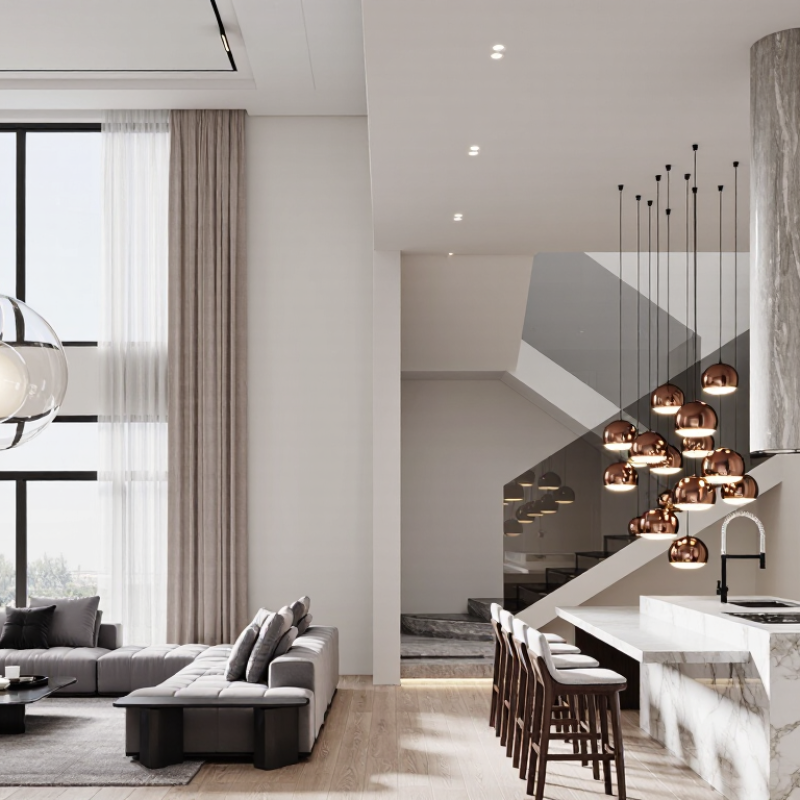
Luxury residential pendant lighting is a decorative ceiling fixture designed to hang above a specific area. It combines focused illumination with architectural presence. Unlike ordinary ceiling lights, a pendant often becomes part of the room’s visual identity. Its shade, finish, height, and proportions influence how people experience the space.
In a dining room, a pendant can create a softer pool of light over the table. In an entry hall, a larger fixture may establish scale and welcome guests. Over a kitchen island, several smaller pendants can support food preparation and conversation. I have found that placement matters as much as appearance. A beautiful fixture can still feel uncomfortable when it hangs too low or produces harsh glare.
Luxury does not always mean excessive size or decoration. It often means controlled brightness, durable materials, careful detailing, and a suitable color temperature. Warm light usually supports relaxation, while clearer light helps with practical tasks. Dimmers also improve flexibility during meals, reading, or evening gatherings. Still, design decisions are rarely perfect. A polished metal finish may reflect too much light, and a dramatic form may compete with artwork. Reviewing the room at different times of day helps reveal these weaknesses. Professional planning should consider ceiling height, viewing angles, electrical capacity, cleaning access, and the visual relationship between the pendant and nearby furniture.
Luxury residential pendant lighting combines decorative design with purposeful illumination. The most suitable type depends on ceiling height, room scale, task requirements, and the desired visual focus.
Typical luminous-flux ranges shown are practical residential specification ranges per pendant. Actual output varies with fixture size, LED efficiency, diffuser material, dimming level, and ceiling height.
Multiple pendants grouped at different heights to create a sculptural focal point over staircases, dining tables, or double-height spaces.
An elongated fixture designed to distribute light evenly along dining tables, kitchen islands, and long reception counters.
A spherical form that provides soft, diffused illumination while adding a refined decorative element to bedrooms, lounges, and dining areas.
A fabric, metal, or architectural shade that delivers broad ambient light and helps define the atmosphere of dining and living spaces.
A statement fixture focused on artistic expression, material quality, and visual presence, often used in entry halls and feature spaces.
Luxury homes in 2026 are using pendant lighting as architectural features, not simple ceiling fixtures. Sculptural pendants suit entry halls, where generous scale creates an immediate focal point. Clustered glass pendants work well above staircases and double-height spaces. Their different drop lengths add movement without overwhelming the room.
Linear pendants remain practical above long dining tables and kitchen islands. Choose a slim form with adjustable suspension for cleaner sightlines. In projects I have reviewed, warm light around 2700K often makes stone, timber, and brushed metal feel more inviting. High color rendering also protects the appearance of artwork and natural finishes. Dimming matters.
Layered pendant arrangements can define seating zones in open-plan interiors. A low, softly diffused pendant feels comfortable above a reading chair, while a directional downlight supports food preparation. Always check the ceiling height and viewing angles before installation. A beautiful fixture can become irritating when it hangs directly across eye level.
Materials are becoming more tactile. Hand-finished metal, ribbed glass, and woven surfaces create shadows that change throughout the evening. Yet decorative detail can collect dust. That maintenance issue is easy to overlook. I would also question oversized fixtures in smaller rooms; dramatic scale is not automatically luxurious. Correct proportion, glare control, and reliable dimming usually create a more refined result.
| Pendant Lighting Type | Best Luxury Residential Applications | Typical Form and Scale | Common Premium Materials | Recommended Light Source | Recommended Color Temperature | Key Design Value | Planning Considerations | 2026 Relevance |
|---|---|---|---|---|---|---|---|---|
| Statement Chandelier Pendant | Double-height foyers, grand stair halls, formal living rooms, and dining rooms | Large sculptural cluster; commonly 600–1,500 mm wide, with drops extending 900–3,000 mm | Hand-finished metal, optical glass, crystal, alabaster, or sculpted resin | Dimmable integrated LED or replaceable LED lamps | 2,700–3,000 K | Creates a strong architectural focal point and establishes visual hierarchy | Confirm ceiling structure, viewing angles, cleaning access, and minimum head clearance | Very High |
| Multi-Light Cluster Pendant | Open-plan living areas, stair voids, entrance halls, and kitchens with high ceilings | Several individual pendants arranged at varied heights; ceiling plate often 300–900 mm wide | Blown glass, metal, stone, ceramic, or fabric shades | LED lamps or individually dimmable LED modules | 2,700–3,000 K | Provides depth, movement, and a tailored composition for irregular volumes | Use a coordinated canopy and plan cable lengths before installation | Very High |
| Linear Pendant | Dining tables, kitchen islands, breakfast bars, studies, and long consoles | Horizontal profile typically 900–2,400 mm long and 100–300 mm wide | Brushed or aged metal, glass, timber, stone, and architectural-grade aluminum | Continuous integrated LED with high color rendering | 2,700–3,000 K | Delivers even task lighting while reinforcing the geometry of long furniture | Align the fixture with the table rather than the room; install dimming controls | Very High |
| Globe Pendant | Dining rooms, bedrooms, corridors, reading corners, and compact seating areas | Single spherical diffuser, commonly 200–500 mm in diameter; works well in repeated groups | Opal glass, frosted glass, polished metal, or stone accents | Replaceable LED lamp or integrated LED | 2,700 K for intimate rooms; up to 3,000 K for dining areas | Softens interiors with balanced proportions and comfortable diffuse illumination | Choose glare-controlled diffusers and keep glass surfaces easy to access | High |
| Architectural Ring Pendant | Modern dining rooms, living rooms, atriums, and contemporary master suites | One or more illuminated rings, generally 600–1,800 mm in diameter | Powder-coated or anodized aluminum, acrylic diffuser, and metal suspension cables | Integrated dimmable LED | 2,700–3,000 K | Introduces a clean geometric centerpiece with a lightweight visual profile | Check the ring diameter against furniture width and specify a low-glare diffuser | High |
| Alabaster or Natural-Stone Pendant | Luxury foyers, powder rooms, bedside zones, dining rooms, and boutique-style lounges | Small single pendants or grouped vertical forms; commonly 150–450 mm in diameter | Translucent alabaster, marble, travertine, bronze, brass, or other natural stone | Low-heat LED source with concealed or diffused illumination | 2,700 K | Reveals natural veining and adds tactile, one-of-a-kind character | Natural stone varies in color and translucency; verify weight and suspension capacity | Very High |
| Decorative Glass Pendant | Kitchen islands, dining tables, wet bars, entry consoles, and bedside installations | Single or grouped shade; commonly 180–400 mm wide per pendant | Hand-blown glass, ribbed glass, smoked glass, clear glass, and aged metal | Replaceable LED lamp with a decorative filament appearance | 2,700 K for warmth; 3,000 K where greater clarity is required | Adds transparency, crafted detail, and controlled sparkle without excessive visual mass | Use glare-resistant lamps and coordinate the number of pendants with the furniture length | High |
| Fabric-Shade Pendant | Bedrooms, sitting rooms, libraries, dressing rooms, and hospitality-inspired interiors | Drum, tapered, or custom textile shade; commonly 350–800 mm wide | Linen, silk, cotton, parchment-style material, brass, and darkened metal | LED lamps with low operating heat | 2,700 K | Produces a calm, residential glow and improves acoustic and visual softness | Keep fabric away from moisture and use a diffuser to reduce direct lamp visibility | High |
| Sculptural Organic Pendant | Biophilic living rooms, resort-style bedrooms, reading areas, and informal dining spaces | Free-form, leaf-inspired, branch-like, or wave-shaped composition; size varies widely | Wood veneer, rattan, woven fiber, ceramic, paper composite, or cast metal | Integrated LED or concealed LED lamps | 2,700–3,000 K | Connects luxury interiors with natural textures and expressive craftsmanship | Confirm material durability, dusting requirements, and compatibility with the room’s humidity | High |
| Adjustable Task Pendant | Kitchen worktops, home offices, bedside tables, and reading or craft areas | Compact directional shade, commonly 180–400 mm wide, with adjustable suspension or head | Powder-coated steel, brass, aluminum, ceramic, or opal glass | High-CRI LED, preferably with dimming capability | 3,000 K for focused residential tasks | Combines decorative detailing with practical, targeted illumination | Control glare, maintain adequate working height, and coordinate with other ambient layers | High |
| Smart Tunable-White Pendant | Multi-purpose living rooms, media rooms, dining rooms, and wellness-oriented bedrooms | Available in linear, ring, globe, or cluster formats; size depends on the selected form | Metal, glass, acrylic, wood, and digitally controlled LED components | Integrated LED with dimming and adjustable white-light settings | Approximately 2,700–6,500 K, with warm settings preferred for evening use | Supports scene control, circadian-oriented routines, and flexible room use | Confirm control-system compatibility, wall-switch access, network reliability, and emergency operation | Very High |
In 2026, luxury residential pendant lighting is moving beyond decoration. Sculptural clusters, linear pendants, and oversized single drops now define dining rooms, stairwells, and double-height entrances. Grand View Research estimates the global decorative lighting market will expand steadily through 2030, encouraging more investment in distinctive, architectural fixtures.
Materials make the strongest visual difference. Brushed brass adds warmth, while aged bronze creates deeper contrast against pale stone. Smoked glass softens glare and produces a calm, intimate glow. Hand-finished alabaster offers natural veining, but each shade varies. That is the appeal. Also, a risk. Perfect symmetry may be impossible.
Designers increasingly combine metal frames with ribbed glass, timber, ceramic, or recycled crystal elements. Layered pendants can create rhythm above long dining tables, while adjustable suspension systems improve ceiling-height flexibility. The U.S. Department of Energy reports that LED lighting uses at least 75% less energy than incandescent lighting and lasts up to 25 times longer. Therefore, integrated LEDs are practical, not merely fashionable. Still, replaceable light sources deserve attention. A beautiful fixture becomes frustrating when repairs require replacing the entire assembly. Warm color temperatures around 2700K to 3000K usually support residential comfort, while dimming allows the material finish to change throughout the evening. Details matter.
Luxury pendant lighting should respond to the room, not only its style. In a kitchen, choose a linear pendant above a long island. Keep its lower edge about 30–36 inches above the worktop. A dining room often benefits from a sculptural cluster or hand-finished glass fixture. It should sit low enough to feel intimate, but never block eye contact. For a bedroom, use compact pendants beside the bed. They free nightstands and create softer pools of light. In a foyer, a tiered pendant can provide drama, but check the ceiling height first. I have seen beautiful fixtures feel wrong when their scale ignores the architecture.
Light quality matters as much as appearance. The U.S. Department of Energy reports that LED lamps use at least 75% less energy and last up to 25 times longer than incandescent lamps. Select dimmable LEDs with a color temperature near 2700–3000K for living areas. Use higher output near food preparation zones. The Illuminating Engineering Society recommends evaluating illumination, glare, and visual comfort together. That advice is easy to overlook. A polished metal shade may reflect harsh points onto a stone island.
Tips: Measure the room twice. Confirm the canopy, drop length, and dimmer compatibility. For open-plan homes, repeat one material across nearby fixtures. Do not match every pendant. Controlled contrast usually feels more luxurious. A lighting plan can still need revision after installation. Furniture, wall color, and daylight often change the result.
Luxury pendant lighting in 2026 is becoming more architectural, but installation still determines its success. Sculptural, linear, and clustered pendants each need different ceiling support. A heavy sculptural fixture needs a ceiling box rated for its weight. Reinforce the mounting point before plastering or painting. For tall rooms, measure the drop from the finished floor. I have seen a beautiful pendant hung too low above a dining table. It looked impressive in drawings, then blocked conversation.
Layering gives residential interiors depth. Pair a central pendant with concealed cove lighting, wall washers, or low-level cabinet lights. Keep color temperatures closely matched, usually between 2700K and 3000K for living spaces. Use dimmers with compatible drivers, and test them at night. A pendant may look gentle at noon but feel harsh beside dark stone after sunset. That detail is easy to miss.
Maintenance should be planned before installation. Leave safe access for dusting, lamp replacement, and driver inspection. Glass shades collect fingerprints, while open metal frames reveal dust quickly. Clean with a soft, dry cloth first. Use approved methods for delicate finishes. Never spray cleaner above energized equipment. Check cords, connections, and heat marks during routine inspections. I prefer a six-month review, although dusty homes may need more frequent care. Perfection is unrealistic. Furniture and habits change, so the lighting plan should remain adjustable.
It is a decorative ceiling fixture suspended above a selected area. It provides focused light and visual character. The shade, finish, height, and proportions shape the room’s atmosphere.
Place one above a dining table for a soft pool of light. Use several smaller fixtures above a kitchen island. A large sculptural pendant can define an entry hall or staircase.
Not necessarily. Correct proportion usually looks more refined than excessive size. An oversized pendant may overwhelm a small room. Dramatic is not always luxurious.
Warm light between 2700K and 3000K often suits living areas. It can make timber, stone, and metal feel more welcoming. Clearer light may support cooking and detailed tasks.
Dimmers adjust brightness for meals, reading, preparation, and evening gatherings. Test them after sunset. A fixture may look gentle at noon but feel harsh beside dark stone at night.
Measure from the finished floor and consider eye level. A pendant above a dining table should not block conversation. Check viewing angles from chairs and nearby walking paths.
A heavy fixture needs a ceiling box rated for its weight. Reinforce the mounting point before plastering or painting. Attractive drawings cannot replace proper structural support.
Pair a central pendant with cove lighting, wall washers, or cabinet lights. Keep their color temperatures closely matched. Layered lighting adds depth and defines open-plan areas.
Leave safe access for dusting, lamp replacement, and driver inspection. Clean glass with a soft, dry cloth first. Open metal frames show dust quickly. Never spray cleaner above energized equipment.
Glare, poor proportions, difficult cleaning, and low suspension are frequent problems. Reflective metal may bounce excessive light. Decorative details can collect dust. The plan should remain adjustable as furniture and habits change.
Luxury residential pendants are more than decorative fixtures; they help define atmosphere, scale, and visual identity in an upscale home. In 2026, key styles include sculptural statement pendants, minimalist linear designs, clustered glass arrangements, nature-inspired forms, and adjustable task-focused fixtures. Materials such as hand-finished metal, blown or frosted glass, stone, wood, and refined textiles add depth, while layered finishes, soft curves, and integrated lighting technology create a contemporary sense of luxury.
Choosing the right pendant depends on each room’s purpose, ceiling height, furniture scale, and desired mood. Oversized pieces can anchor entryways and living rooms, while evenly spaced pendants suit kitchen islands, dining areas, and workspaces. Proper installation requires secure mounting, suitable proportions, balanced spacing, and compatibility with dimming controls. Combining pendants with recessed, wall, or concealed lighting produces a comfortable layered effect. Regular dusting, careful cleaning of delicate surfaces, and periodic checks of connections help preserve both performance and appearance.